Curated by Juan Ortiz Freuler -Sept 16- Sign up to access internal updates and to receive the newsletter via email
🧭[News: Shanghai Cooperation Organization summit: a show of unity among eastern emerging powers]
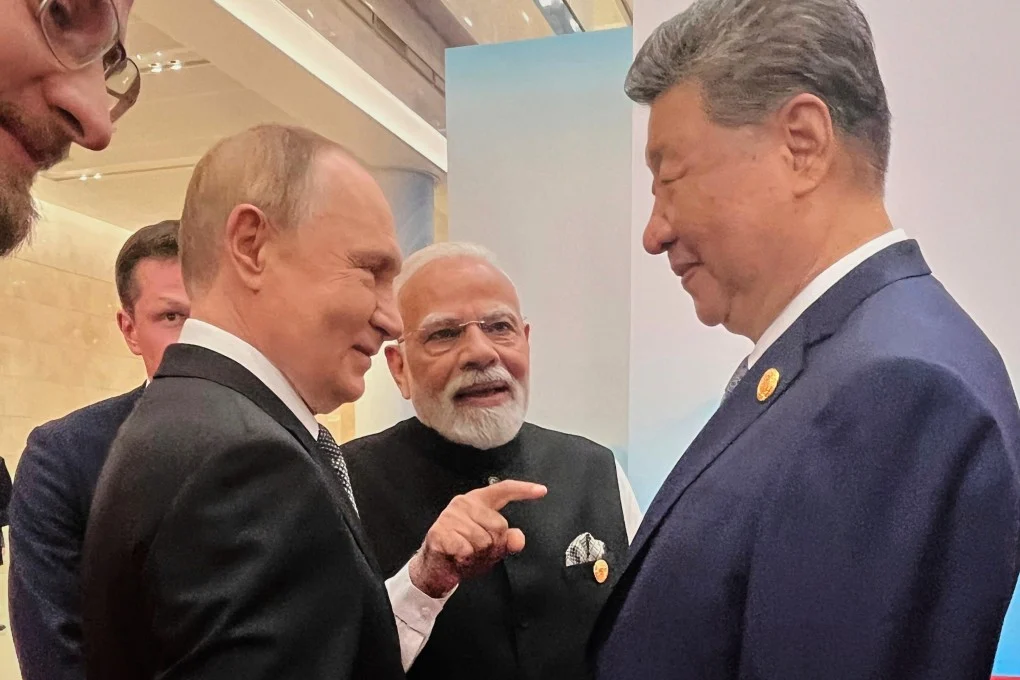
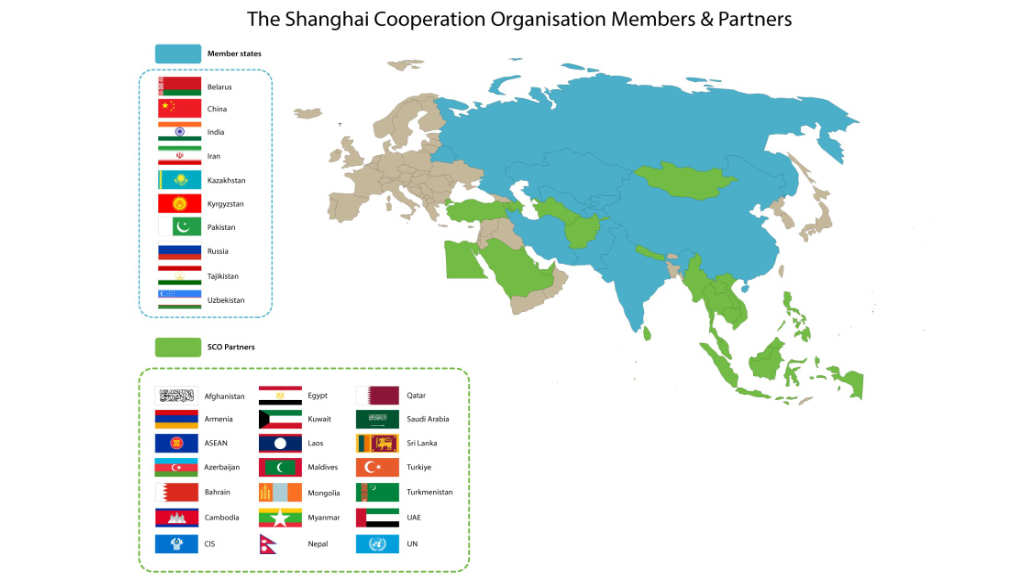
“SCO was established by China, Russia, Kazakhstan, Kyrgyzstan, Tajikistan and Uzbekistan and later expanded to include India, Iran, Pakistan and Belarus. Afghanistan and Mongolia are observer states, and 14 other countries are called “dialogue partners.” The country hosting the annual summit rotates every year.”
https://apnews.com/article/china-military-parade-sco-putin-xi-kim-7d71b8ef9dc3bcc5de2ee192debd87c7
🌄[Opinion: A new world order isn’t coming, it’s already here]
“Yet none of this new global reality means that things are now fixed. Indeed, the new world order is in a state of disruptive flux that promises years of growing pains. Both the U.S. and China need allies, and countries in the Global South will continue to hedge between the competing powers.”
🇨🇳💨🇺🇸[Opinion: US and China unveil AI Action Plans: Non-aligned AI for Latam?]
In recent weeks, two starkly different visions of the future of the digital world emerged from the globe’s AI superpowers. These competing philosophies have put Latin America in an uncomfortable position between them. The region now faces a digital dependency trap that could determine its technological fate for decades.
https://americasquarterly.org/article/latin-americas-opportunity-in-the-ai-race/
🪄✨[Opinion: The myth of sovereign AI: Countries rely on U.S. and Chinese tech]
“Every government aiming for sovereign artificial intelligence has roughly the same mantra: build their own ChatGPT, leapfrog into AI leadership, and be free of foreign dependence. It’s a compelling narrative, but one that’s arguably unrealistic, as a handful of American and Chinese tech firms control the AI infrastructure — from chips and large language models to cloud services and data centers.”
https://restofworld.org/2025/chinese-us-tech-foreign-ai-dependence
🇮🇳[Opinion: India between Multi-alignment – Non-Alignment and …confusion?]
“[The Ministry of External Affairs] sighed again. Maybe instead of Non-Alignment, have Multi-Alignment, like multitasking, and be aligned on Mondays and Wednesdays with America, Tuesdays and Thursdays with Russia, and Fridays and Saturdays with China, taking a much-needed Alignment holiday on Sunday.”
https://timesofindia.indiatimes.com/blogs/jugglebandhi/out-of-alignment
🇿🇦[Opinion: The deep roots of a tense US-South Africa relations]
“South Africa and the United States occupy prominent positions on the world stage. South Africa is a regional powerhouse in Africa, and the United States is a global superpower. The diplomatic relationship between the two, however, has never been straightforward. Moments of cooperation have existed, but genuine strategic alignment and “fully friendly” relations have consistently eluded these two countries. Given the enduring complexity of this relationship, historical, political, and geopolitical factors make a true US-South Africa friendship unlikely in the foreseeable future.”
🇨🇳🤖🪂 [NEWS: Prominent Chinese AI company exits to Singapore following US pressure]
“Manus’s abrupt exit from China for Singapore came on the heels of a major US financing deal and marks a sharp reversal for the start-up, which just months ago was hailed as the next DeepSeek — further proof that China’s AI innovation matched Silicon Valley. The multimillion-dollar investment deal led by top-tier US venture firm Benchmark and the Manus departure have sparked controversy and criticism on both sides of the Pacific. In China, the team behind Manus have been labelled “defectors” by some online media outlets and criticised for laying off local staff and shifting hiring to Singapore. In the US, Benchmark and its partners have come under fire, with China hawks in the national security establishment contending the deal flouted new rules banning American groups from investing in Chinese AI. The US Treasury Department is reviewing the transaction, according to two people familiar with the matter.”
https://www.ft.com/content/8e8521a7-b232-4fe0-b262-9dafb8ff5bdd
🪐[Research from within NATM: The Geopolitics of Knowledge and Academic Publishing – by Domenico Fiormonte]
“In this article, I focus in particular on the oligopolies of scientific publishing, showing how the concentration in a few hands—almost all Western and Anglophone—not only distorts the representation of research at the global level, but also constitutes a striking case of epistemic colonialism.”
https://digitcult.lim.di.unimi.it/index.php/dc/article/view/301
✴️📓[Policy Brief: Pulse 2025: The Trump effect on digital rights in the global majority]
Trump’s electoral victory is the expression of a demand for radical change. Six months into Trump’s government, it seems we can expect these demands for change to be channeled towards a program that is nationalist while favoring the traditional US elites and white men. This document explores three pillars:
1) Geopolitics: More nationalism and interest in the scale of state (as opposed to individual or global -> Incl. shift from multilateral forums to bilateral deals);
2) Tech: AI boom deal-making & market consolidation show power struggles have shifted from consumer facing products to the lower layers of the stack (chips and energy), where power is more consolidated.
3) Activism: civil society organizations lose access and influence as key conversations move to more closed forums dealing with trade, national security and industrial policy.
https://digitalresilience.network/wp-content/uploads/2025/08/DRN_Pulse_2025_Public.pdf
🎙️[PODCAST: Return to Bandung]
“Return to Bandung is a podcast that explores questions of imperialism, resistance, and internationalist solidarity throughout history and into the present day. Through historical analysis, interviews with expert guests, and deep dives into classic works of anticolonial theory, Return to Bandung seeks to make the case for why anti-imperialist politics are as important in our current moment as ever before.”

🎙️[PODCAST: Tech Won’t Save Us]
“Why Countries Must Fight For Digital Sovereignty” w/ Cecilia Rikap (2025)
https://techwontsave.us/episode/290_why_countries_must_fight_for_digital_sovereignty_w_cecilia_rikap
Prior NATM discussions on Tech Won’t Save US
“The Global South Holds a better future for Tech” w/ Juan Ortiz Freuler (2020) https://techwontsave.us/episode/18_the_global_south_holds_a_better_future_of_tech_w_juan_ortiz_freuler.html
“The Threat of Data Colonialism” w/ Ulises A. Mejias & Nick Couldry (2024)
https://techwontsave.us/episode/246_the_threat_of_data_colonialism_w_ulises_a_mejias__nick_couldry
🛎️Call for papers:
Cambridge Forum on Technology and Global Affairs: New Power Brokers in an Age of Technological and Geopolitical Upheaval
“Contributions can include research papers, case studies, position and policy papers, as well as interviews with policy and technology leaders. Further information on contribution types is available”
Deadline: Oct 1
IPR: Big tech in global security governance
“What are the public-private relations between Big Tech and security bureaucracies in various contexts? A decade after the Snowden revelations, what do we know of public-private relations between Big Tech and security apparatuses in their countries of origin? –
Deadline: Sept 21
https://policyreview.info/events/call-papers-big-tech-global-security-governance
Sign up here to get the NATM newsletter in your inbox and access 🏡Internal updates: