Curated by Juan Ortiz-Freuler – Sign up to receive as email
MACRO TRENDS
🇨🇦[Speech: Canadian PM Mark Carney January speech at Davos: We are in the midst of a rupture, not a transition]
“For decades, countries like Canada prospered under what we called the rules-based international order. We joined its institutions, we praised its principles, we benefited from its predictability. And because of that, we could pursue values-based foreign policies under its protection. We knew the story of the international rules-based order was partially false that the strongest would exempt themselves when convenient, that trade rules were enforced asymmetrically. And we knew that international law applied with varying rigour depending on the identity of the accused or the victim. This fiction was useful, and American hegemony, in particular, helped provide public goods, open sea lanes, a stable financial system, collective security and support for frameworks for resolving disputes. So, we placed the sign in the window. We participated in the rituals, and we largely avoided calling out the gaps between rhetoric and reality. This bargain no longer works. Let me be direct. We are in the midst of a rupture, not a transition”
Read in full: https://www.weforum.org/stories/2026/01/davos-2026-special-address-by-mark-carney-prime-minister-of-canada/
🇩🇪 See also speech of German Chancellor Merz
🇺🇸[Speech: US Sec of State Marco Rubio’s February speech at the Munich conference: echoes of old empires]
“It is a path we have walked together before and hope to walk together again. For five centuries, before the end of the Second World War, the West had been expanding – its missionaries, its pilgrims, its soldiers, its explorers pouring out from its shores to cross oceans, settle new continents, build vast empires extending out across the globe.
But in 1945, for the first time since the age of Columbus, it was contracting…The great Western empires had entered into terminal decline, accelerated by godless communist revolutions and by anti-colonial uprisings that would transform the world and drape the red hammer and sickle across vast swaths of the map in the years to come.
Against that backdrop, then, as now, many came to believe that the West’s age of dominance had come to an end and that our future was destined to be a faint and feeble echo of our past. But together, our predecessors recognized that decline was a choice, and it was a choice they refused to make. This is what we did together once before, and this is what President Trump and the United States want to do again now, together with you.”
See also: Finland’s President interventions and why it is the Global South that will define the next world order. [author of “The Triangle of Power”]
🇮🇳🇪🇺 [India-EU trade deal: Diversification through..Mother of all trade deals? Bilateral trade was $137 billion in 2024-25]
“Under the deal, India will eliminate or reduce tariffs on 96.6% of EU exports by value. Meanwhile, the EU will reciprocate by reducing tariffs on 99.5% of Indian goods. The European Commission projects $4.7 billion in annual duty savings, with exports potentially doubling by 2032.
“This agreement will deepen the economic ties, create new opportunities for our people, and strengthen the partnership between India and Europe for a future characterized by prosperity,” said Indian Prime Minister Narendra Modi.”
https://www.weforum.org/stories/2026/02/india-eu-mother-of-all-trade-deals-what-to-know
Fact sheet released by Indian government: https://www.commerce.gov.in/wp-content/uploads/2026/01/Factsheet-on-India-EU-trade-deal-27.1.2026.pdf
ECFR analysis: https://ecfr.eu/article/its-the-geoeconomy-stupid-why-the-eu-india-deal-matters-beyond-trade/
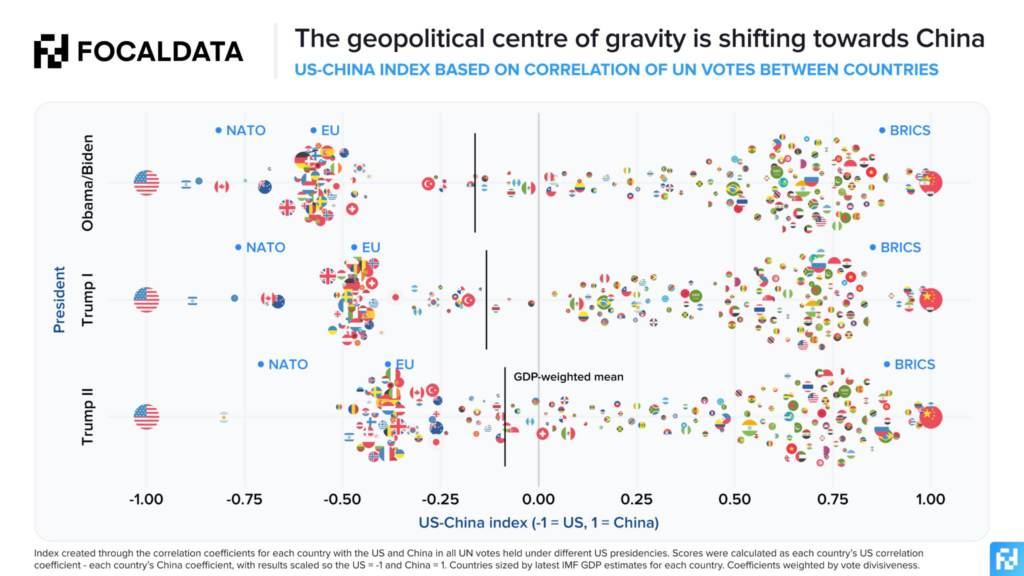
🇨🇳🇺🇸[Analysis: The Geopolitical centre of gravity is shifting towards China]
“We analysed decades of United Nations voting data and responses to the World Values Survey and have proven empirically that the geopolitical centre of gravity is already shifting away from the United States and towards China, driven mainly by Europe’s increased distance from the US under the Trump presidencies. We also find that Central and South America are likely to have an outsized influence on the future balance of power.”
Source: https://www.focaldata.com/blog/mapping-the-new-geopolitical-axis-a-new-white-paper-from-focaldata
Complementary analysis: https://www.semafor.com/article/02/08/2026/global-powers-pivot-toward-china-report-shows
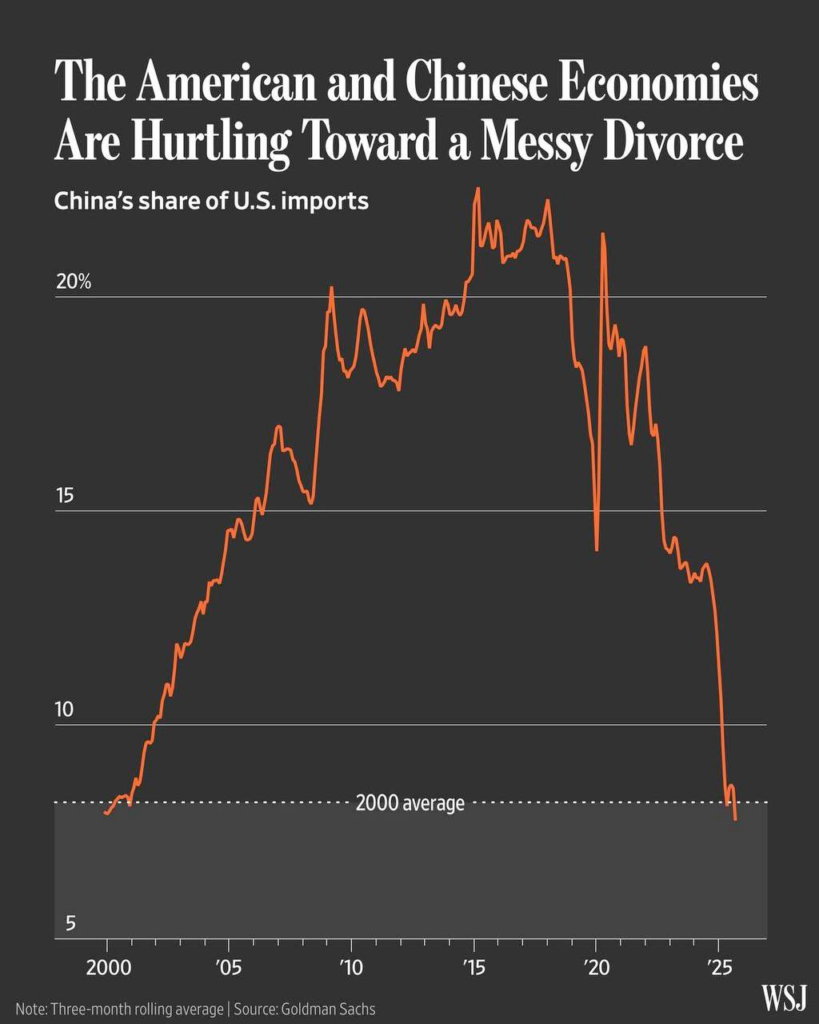
🇨🇳🇺🇸[The US – China decoupling]
“The breakup is focused on sensitive matters now considered national-security issues, including semiconductors, food and energy”
Source: https://www.wsj.com/world/china/us-china-decouple-economy-minerals-tech-602fdee6?mod=e2fb
🇨🇺🇷🇺🇨🇳🇺🇸[US blockades Cuban access to oil – Russia aims to circumvent it]
“The country has long relied on Venezuela for much of its jet fuel, but it has not received crude or refined products from its closest ally since mid-December, when Washington moved to block Venezuelan exports.
“Supply of crude and oil products is expected from Russia to Cuba in the near future as humanitarian aid,” a Russian embassy diplomat told the newspaper.
Izvestia said Russia last sent oil to Cuba in February 2025, delivering 100,000 metric tons.
The Kremlin declined to comment directly on the reported plan but said it was in contact with Havana to discuss possible support.”
[See also Guevara speech at UN in 1964 // Second Declaration of Havana – 1962, following Cuba’s expulsion from the Organization of American States]
🪐[Opinion: Beyond the “End of Globalization”]
“the central message from Davos was not that the world is entering an era without cooperation. Cooperation persists and, in many domains, remains indispensable. What has changed are the conditions under which cooperation occurs. Barriers have risen, costs have become explicit and terms have been institutionalized. The earlier era—one that treated openness as the default, trust as a given and rules as neutral—has been fading. In its place is a form of conditional connectivity, where questions of risk allocation, benefit distribution and ultimate backstopping determine whether cooperation can even begin.
This shift is often described as “transactionalization” or “de-regulation” and is frequently taken as evidence that globalization itself is ending. Yet, this conclusion overlooks a more fundamental reality: Interdependence in the modern world is not a matter of sentiment or preference; it’s a structural condition. What is changing is not the existence of connectivity but the way it is organized, tiered and priced […] Globalization has not ended. It is undergoing a profound structural transformation. The central question is not whether the world has entered a “transactional era” but whether, after transactions, there remain actors both willing and capable of re-embedding layered connectivity into institutions that keep competition within controllable bounds.
https://www.chinausfocus.com/finance-economy/beyond-the-end-of-globalization
[TECH SHIFTS]
🇮🇳[India hosts AI-Impact summit- Leaders of Brazil and France among attendees]
“Prime Minister Narendra Modi inaugurated the five-day AI Impact Summit in New Delhi, which aims to declare a “shared roadmap for global AI governance and collaboration”.“This occasion is further proof that our country is progressing rapidly in the field of science and technology,” and it “shows the capability of our country’s youth”, he said in an X post on Monday.
Touted as the biggest edition yet, the Indian government is expecting 250,000 visitors from across the sector, including 20 national leaders and 45 ministerial-level delegations.’ […] The summit has the loose themes of “people, progress, planet” – dubbed the “three sutras”.
🇮🇳[Opinion: Can India be a “third way” AI alternative to the U.S. and China?]
“the promise of AI for good or AI for development closely resembles earlier development narratives: It obscures trade-offs, externalities, and power asymmetries. There is little transparency around who bears the costs, who captures the value, and whose priorities ultimately shape these technological pathways. Labor in low and middle-income countries powers AI via content moderation, data labeling, and even humans masquerading as AI. These countries have critical minerals used throughout the AI supply chain. Land, energy, and water in already resource-strapped countries are increasingly being used for data centers. Unequal dynamics are structuring not only relations between developing and developed nations, but also elsewhere, with India actively exporting software platforms and services. As we look ahead to the Summit, we need to scrutinize agendas that read like sales pitches for government adoption of AI”
https://restofworld.org/2026/india-ai-summit-third-way-global-south-big-tech
[See also: India and the Global South: from non-alignment to system-shaping partnership]
🇨🇱[NEWS: Chile launches open-source AI model designed for Latin America]
Latam-GPT is the result of a two-year regional effort led by the National Center of Artificial Intelligence of Chile, CENIA, and supported by over 30 institutions across eight Latin American countries.“Latam-GPT is trained with a proportion of Latin American data that previously did not exist online and was not included in existing models,” said Rodrigo Durán, executive director at CENIA. “This allows for more accurate, correct and efficient performance when it comes to Latin America and the Caribbean.”
Latam-GPT is trained on data from private sources obtained through strategic partnerships across the region, as well as synthetic data used to address areas identified as underrepresented, said Gabriela Arriagada, a researcher at CENIA and head of the project’s ethics team.”
🏗️[Podcast: Sovereignty and Infrastructure diplomacy]
“Governments increasingly view subsea cables as strategic national security assets rather than mere commercial infrastructure. The French government’s recent intervention with ASN exemplifies this shift toward digital sovereignty. Critical connectivity infrastructure is now subject to the same geopolitical considerations as energy pipelines or military installations.
This has given rise to what Colasante calls “infrastructure diplomacy”—the recognition that building critical infrastructure requires navigating complex relationships between hyperscalers, telecom providers, energy companies, and multiple levels of government. Without this diplomatic approach, infrastructure simply cannot be built, regardless of technical capability or financial resources.”
https://resources.telegeography.com/infrastructure-is-the-real-ai-bottleneck
⛏️[NEWS: US hosts 54 countries to agree on critical minerals]
“Today the United States, together with our partners and allies, has set out to reshape the global market for critical minerals and rare earths. Secretary of State Marco Rubio, joined by Vice President JD Vance, Treasury Secretary Scott Bessent, Interior Secretary Doug Burgum, Energy Secretary Chris Wright, and U.S. Trade Representative Ambassador Jamieson Greer, hosted representatives of 54 countries and the European Commission, including 43 foreign and other ministers.
Delegations from the following countries attended: Angola, Argentina, Armenia, Australia, Bahrain, Belgium, Bolivia, Brazil, Canada, Cook Islands, the Czech Republic, the Democratic Republic of the Congo, the Dominican Republic, Ecuador, Estonia, the European Commission, Finland, France, Germany, Greece, Guinea, India, Israel, Italy, Japan, Jordan, Kazakhstan, Kenya, Lithuania, Malaysia, Mexico, Mongolia, Morocco, New Zealand, Norway, Oman, Pakistan, Paraguay, Peru, Philippines, Poland, Qatar, the Republic of Korea, Romania, Saudi Arabia, Sierra Leone, Singapore, Sweden, Thailand, the Netherlands, Ukraine, the United Arab Emirates, the United Kingdom, Uzbekistan, and Zambia.”
https://www.state.gov/releases/office-of-the-spokesperson/2026/02/2026-critical-minerals-ministerial
Podcast from China Global South Project
⛏️[Opinion: ‘Pax Silica’ and Pursuit of Greenland Give Shape to Trump’s Imperial AI Ambitions]
“The declaration is not a formal treaty with enforcement mechanisms—it’s more like a “statement of shared principles” and intentions. For the US, the goal is straightforward. Right now, China controls about 90% of rare earth processing, most of the world’s advanced manufacturing capacity, and has been aggressively investing in AI. The administration sees this as an unacceptable threat, so it is trying to organize America’s allies into a parallel system that excludes China and creates supply chains that run through its partners instead.
The framework involves the US providing advanced technology, security guarantees, and market access, while allies provide capital, manufacturing capacity, and natural resources. As noted by Rest of World, Qatar and the UAE bring sovereign wealth funds, energy, and strategic location. Japanand South Koreabring semiconductor and advanced manufacturing expertise. Australia bringsminerals and technology. Israel and Singaporebring tech innovation. In this paradigm, the US sits at the top, setting standards and controlling access to the most critical AI technologies.”
Critical analysis regarding consequences for Global South (Al Jazeera) /
🇺🇸[US companies take control over US TikTok and… increase data collection?]
“According to its new privacy policy, TikTok now collects more data on its users, including their precise location, after majority ownership officially switched to a group based in the US”
Source: https://www.wired.com/story/tiktok-new-privacy-policy/
🇺🇸[The reorganization of the US stack: Homeland Security Wants Social Media Sites to Expose Anti-ICE Accounts]
“The Department of Homeland Security (DHS) has reportedly been asking tech companies for information on accounts posting anti-ICE sentiments. According to The New York Times, DHS has sent hundreds of administrative subpoenas to Google, Reddit, Discord and Meta over the past few months. Homeland Security asked the companies for names, email addresses, telephone numbers and any other identifying detail for accounts that have criticized the US Immigration and Customs Enforcement agency or have reported the location of its agents. Google, Meta and Reddit have complied with some of the requests”
See also: “The Authoritarian Stack: How Tech Billionaires Are Building a Post-Democratic America”
https://www.authoritarian-stack.info
🇻🇪🇺🇸[Anthropic’s Claude used in US abduction operation in Venezuela – relation grows tense with US Department of War]
“The Department of War’s relationship with Anthropic is being reviewed. Our nation requires that our partners be willing to help our warfighters win in any fight. Ultimately, this is about our troops and the safety of the American people,” chief Pentagon spokesperson Sean Parnell told The Hill in a statement on Monday. For months, the Pentagon and Anthropic have held discussions around the U.S. military’s terms of use of Claude, its signature AI product. But now the Pentagon is close to cutting ties with Anthropic and labeling the San Francisco-based company as a supply chain risk, Axios reported Monday. The company wants to make sure that its tools are not used to develop weaponry that fires without human input and that its products are not used for mass surveillance on Americans”
https://thehill.com/policy/defense/5740369-pentagon-anthropic-relationship-review
🇷🇺[Russia taking steps to block WhatsApp]
“U.S. messenger app WhatsApp, owned by Meta Platforms , has been completely blocked in Russia for failing to comply with local law, the Kremlin said …, suggesting Russians turn to a state-backed “national messenger” [MAX] instead.”
🇪🇺🇺🇸[EU to diversify energy away from US suppliers]
“The European Union will step up efforts to diversify away from American liquefied natural gas following U.S. President Donald Trump’s threats to take control of Greenland, EU energy chief Dan Jørgensen said Wednesday.
Calling the events of recent week a “clear wake-up call,” Jørgensen said growing geopolitical instability — from Russia’s war in Ukraine to rising tensions with Washington — means the EU can no longer assume energy ties are immune from security shocks”
🇳🇱🇺🇸[Analysis: Dutch concerns over US tech dominance increase]
“If the Dutch government does something that [U.S. President Donald] Trump doesn’t like, he can shut down our government with one push of a button,” the petition reads. “That’s a big danger.”
The debate over DigiD has put the spotlight on a topic that has been simmering for a while.
With the Netherlands a long-time proponent of the transatlantic relationship, Dutch society is built on U.S. technology and IT services — as is the country’s government. That’s now seen as a glaring security issue as Trump fires off threats toward Europe.
Two-thirds of the domain names of Dutch governments, schools and other critical companies rely on at least one U.S. cloud provider, research by the Dutch public broadcaster showed Sunday, with Microsoft the frontrunner.”
https://www.politico.eu/article/netherlands-eu-us-tech-digid-donald-trump-policy
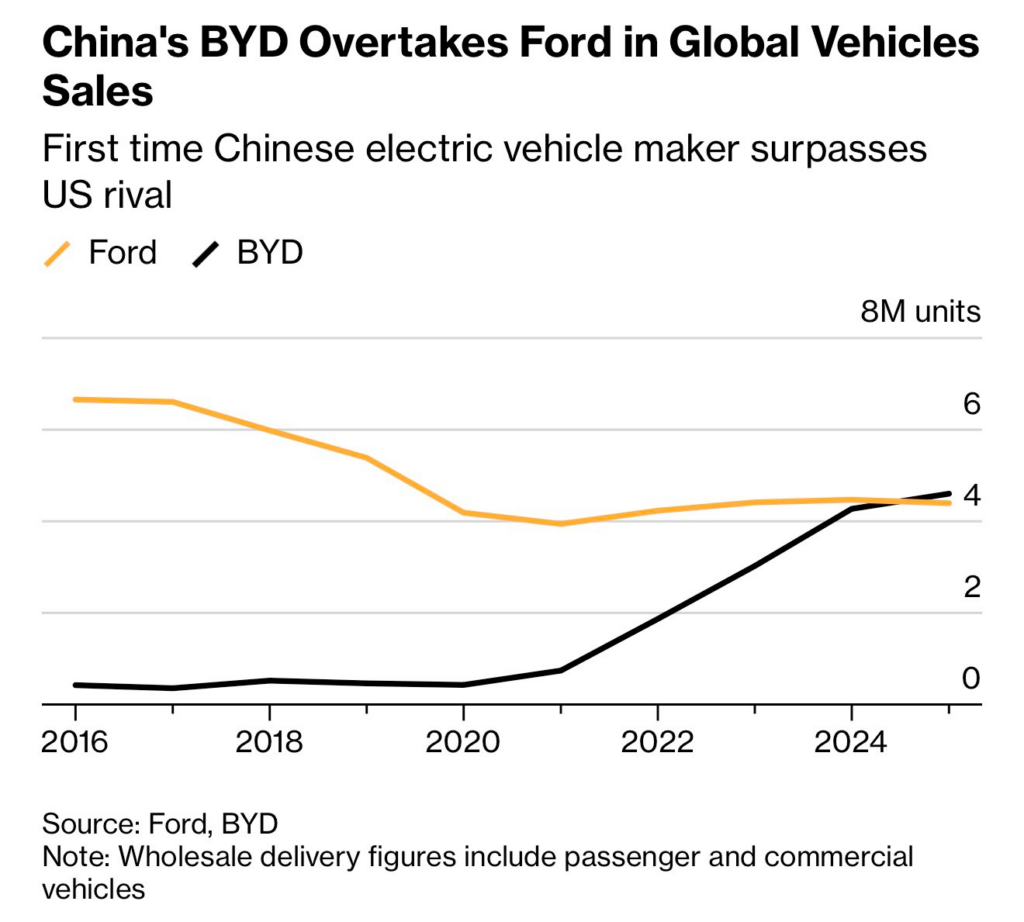
🚗🇺🇸 🇨🇳[China’s BYD now sells more cars than US’s Ford]
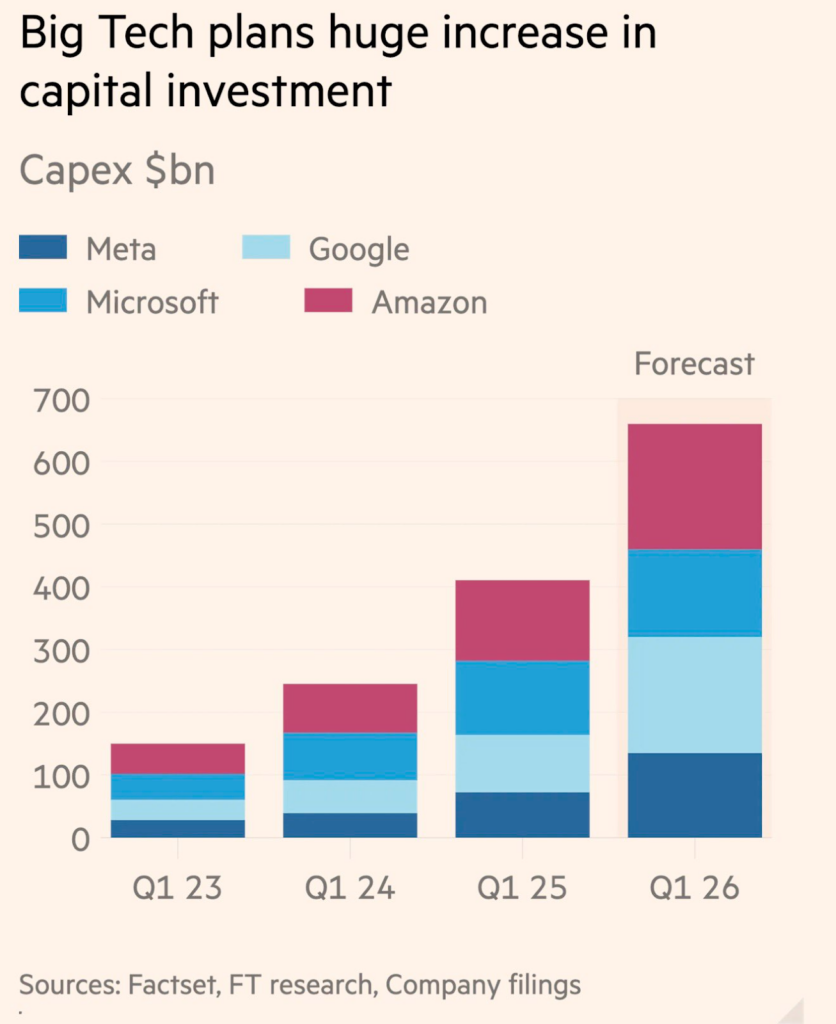
💥 [Big tech planning massive AI infrastructure investment….delaying the burst of the AI bubble?]
Source: https://www.ft.com/content/d503afd5-1012-40f0-8f9d-620dcb39a9a2
On the AI bubble concerns:
https://www.npr.org/2025/11/23/nx-s1-5615410/ai-bubble-nvidia-openai-revenue-bust-data-centers
🧵[Meta makes billion dollar investment in US cable company]
“Facebook parent Meta Platforms will pay Gorilla Glass maker Corning up to $6 billion over the next several years in a deal to provide fiber-optic cables for its AI data centers, the companies said on Tuesday.
Corning will supply advanced optical fiber, cable and connectivity products to Meta, while expanding its manufacturing capacity in North Carolina, including at its cable factory in Hickory, where Meta will be the anchor customer.”
🫂[Opinion: Socialist Co-Ops Against Silicon Valley Empires]
“co-ops remain one of the few practical instruments available for a broader convergence of unions, social movements, and governments to rebuild power in AI-centered economic systems. But without a political mandate, co-ops cannot mount a meaningful challenge to Big Tech’s control over the essential infrastructures of the AI age: energy, data, computation, and labor. Reclaiming their radical roots is now essential”
https://jacobin.com/2026/02/socialist-co-ops-silicon-valley-tech
📢 [News from within the network]
[New lab: Digital ecologies]
Launch of the Digital Ecologies Network at King’s College: “Digital Ecologies is an interdisciplinary network dedicated to advancing research, dialogue, and public engagement on the entanglements of digital technologies with environmental, social, and political ecologies.”
https://www.kcl.ac.uk/research/digital-ecologies-network
[New book chapter]
Clouded Judgments: Problematizing Cloud Infrastructures for News Media Companies
“While existing scholarship has examined how platforms shape news distribution and content moderation, the present chapter shifts focus to a less visible but equally consequential layer: the cloud infrastructure that has become the operational environment for news production itself.”
https://papers.ssrn.com/sol3/papers.cfm?abstract_id=6096289
[Academic conference]
NATM members are preparing two proposals for the Association of Internet Researchers (AoIR) conference taking place in Mexico City 14-17 October 2026.
Pre-constituted panel
We are soliciting abstracts for this preconstituted panel at AoIR that address any of these themes:
- Applications of Dependency Theory as a theoretical lens for understanding data and digital colonialism
- Case studies of diverse applications of “digital sovereignty” from a critical perspective
- Explorations of Non-Alignment as a resistance and governance strategy against the global hegemony of Big Tech
Due date: February 21, 2026
Abstract format: 1000-1200 words, not including references. More info
Contact: Juan Ortiz Freuler (juanof@protonmail.com) or Ulises Mejias before Feb 21st
Pre-Conference workshop: Developing a Glossary on Dependency Theory
Under development: The goal is to develop a relational mapping of definitions, concepts, activity, actors and more to show how debates on dependency relate and can benefit from Latin American scholarship on Dependency Theory.
Led by: Dependency Theory working group leads Guilherme Cavalcante Silva, Luciana Musello, or Juan Ortiz Freuler for more information (lmusello@usfq.edu.ec, juanof@protonmail.com, gcsilva@yorku.ca )
🌍 🇨🇳 [In-Focus: China-Africa relations in 4 figures]
[90% of Africa’s exports to China come from 20 countries – totalling U$114 billion in 2025]
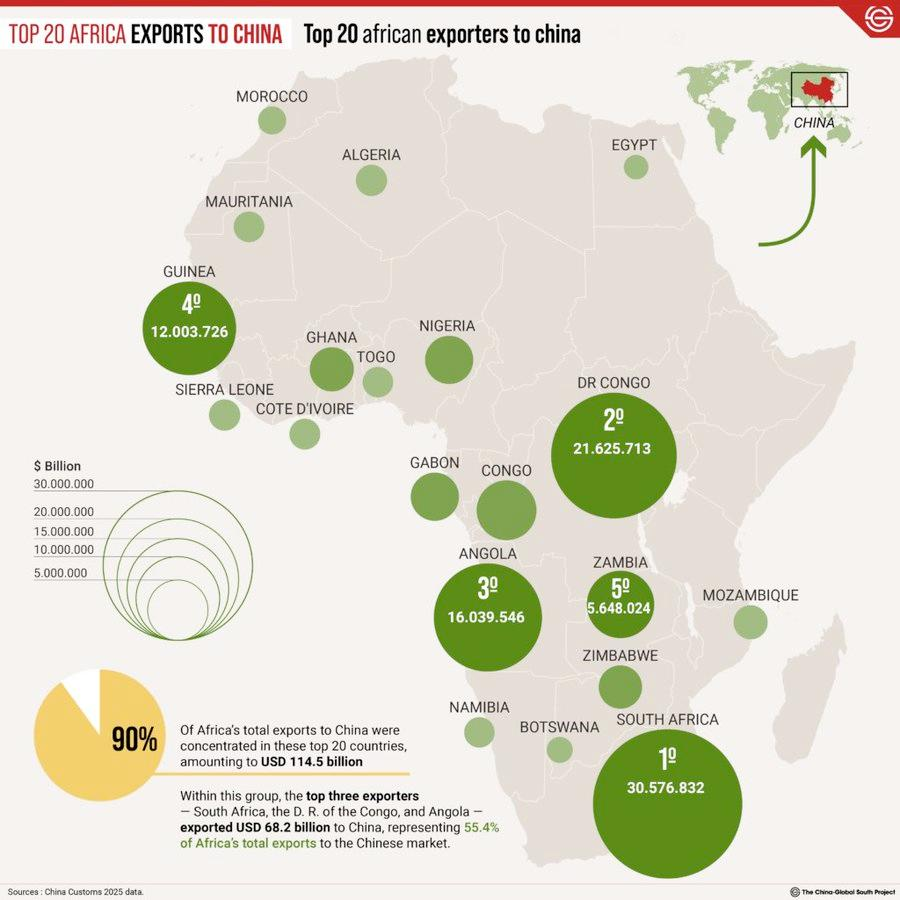
For more on China’s trade with Africa see: https://oec.world/en/profile/country/chn (click on Africa – in yellow under the import/export graph]
[Trade balance – from the perspective of China]
Most countries import more Chinese goods than what they export to China. Angola ($14B) and DR Congo ($17B) are major exceptions, with massive trade surpluses]
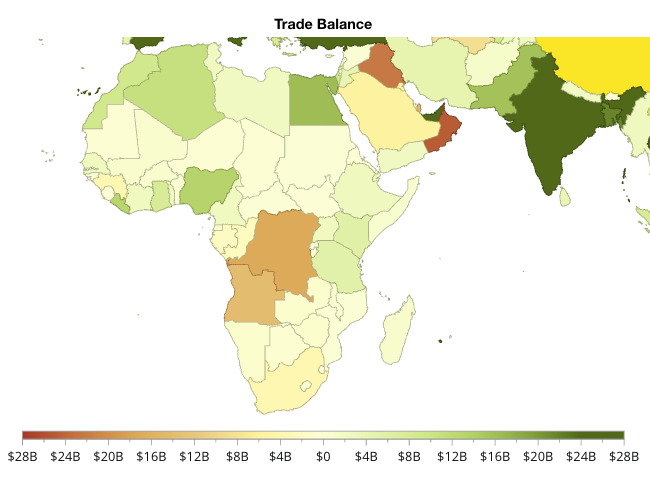
Source: https://oec.world/en/profile/country/chn
[Chinese loans to Africa over the past 20 years amounted to $180 billion – Angola being the country that took the most – 271 loans totalling $49 billion, mostly for energy projects]
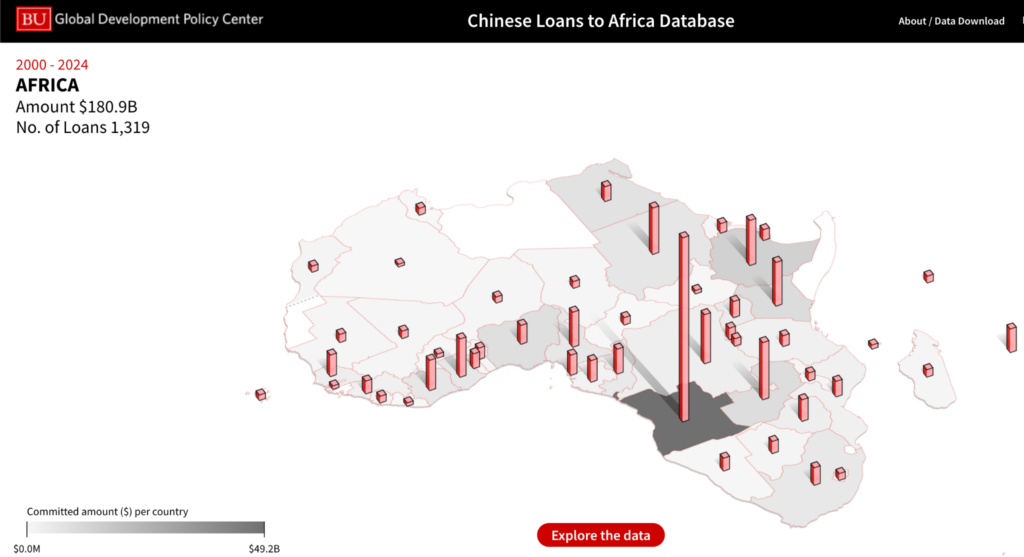
Explore interactive database: https://www.bu.edu/gdp/chinese-loans-to-africa-database/
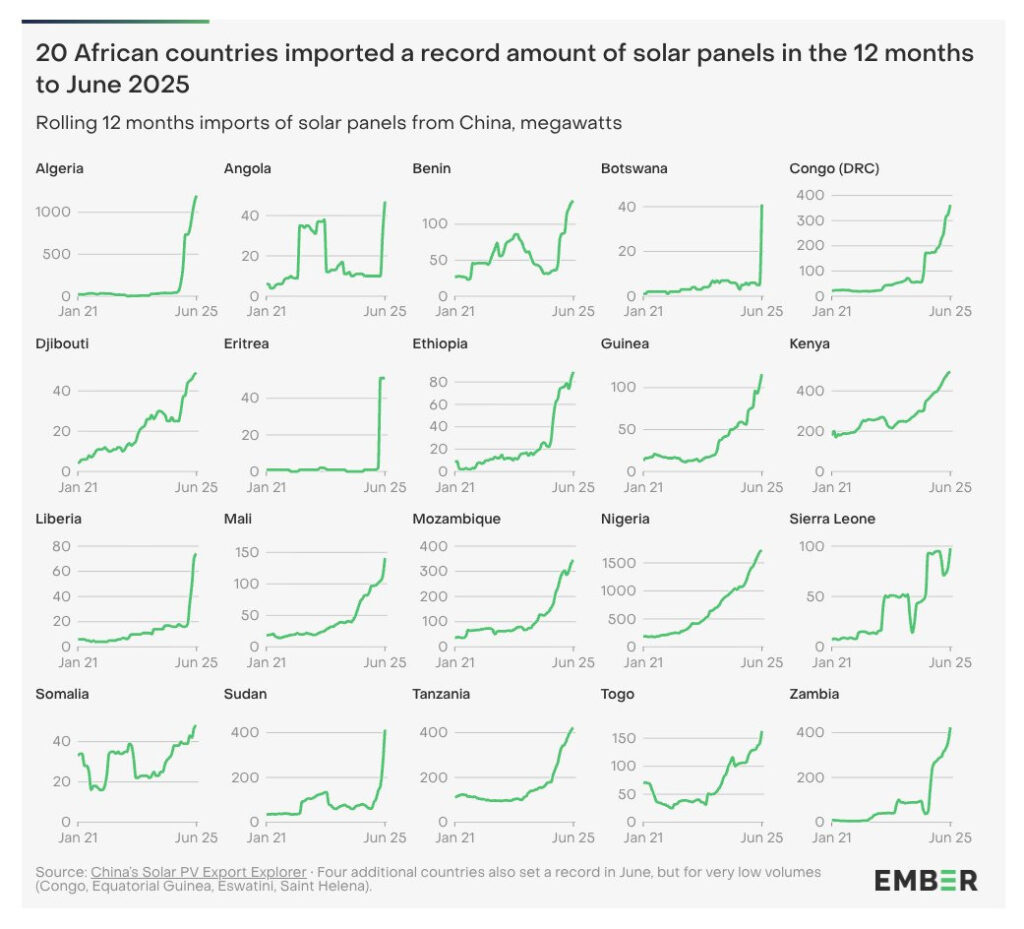
[Hydro-power projects in the region]
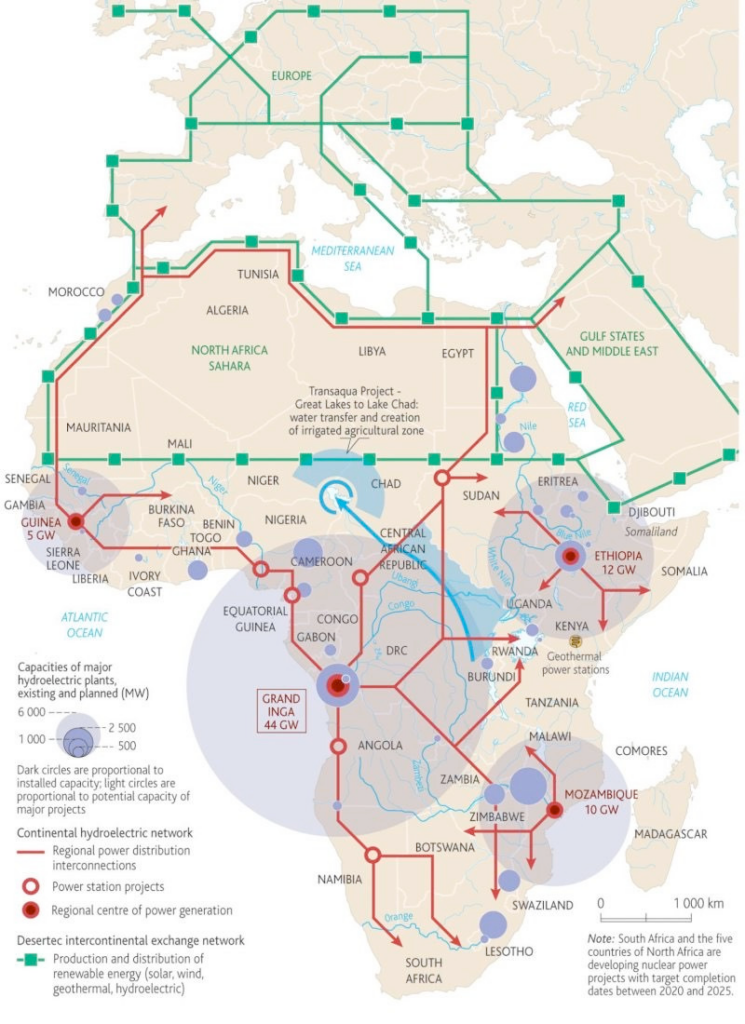
“The structure would be called the Grand Inga Dam. Located in the Democratic Republic of Congo, it would have twice the power generation of China’s Three Gorges and, therefore, be the world’s largest hydroelectric plant. […]
There is also concern about the project’s revolving set of international partners. Just last week, Chinese state-owned firm the Three Gorges Corporation, withdrew from the project, a source close to the partnership told the BBC.” https://www.bbc.com/news/articles/c62jmq0z89jo
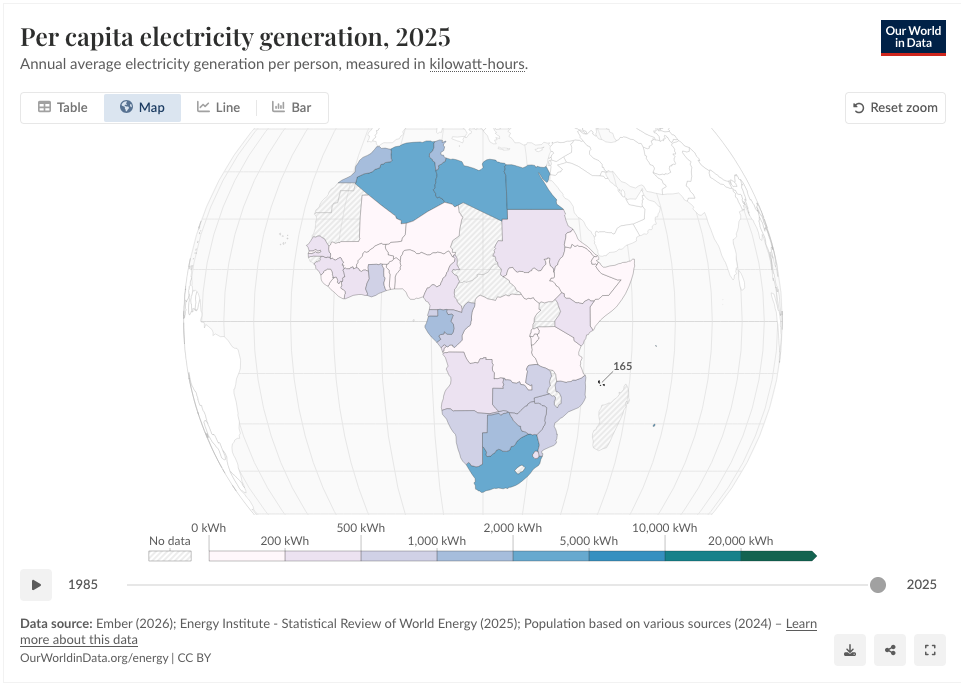
[Africa’s growing energy supply over time]
[Datacenters from key Chinese providers + all datacenters]
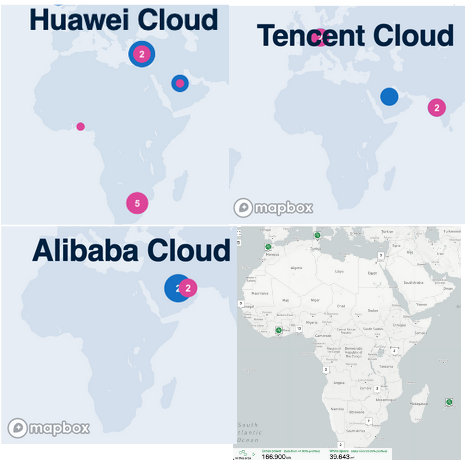
Sources: https://www.cloudinfrastructuremap.com/#/cloud-service-provider/huawei-cloud
https://map.datacente.rs/africadatacenters
–
Sign-up:
Sign up here to get the NATM newsletter in your inbox!