Curated by Juan Ortiz Freuler / Sign up / Submit contributions
🇺🇸 🔻->🔵 [NEWS: US elections put Democrats in charge of Congress. Will this shift shape US economic priorioties?]
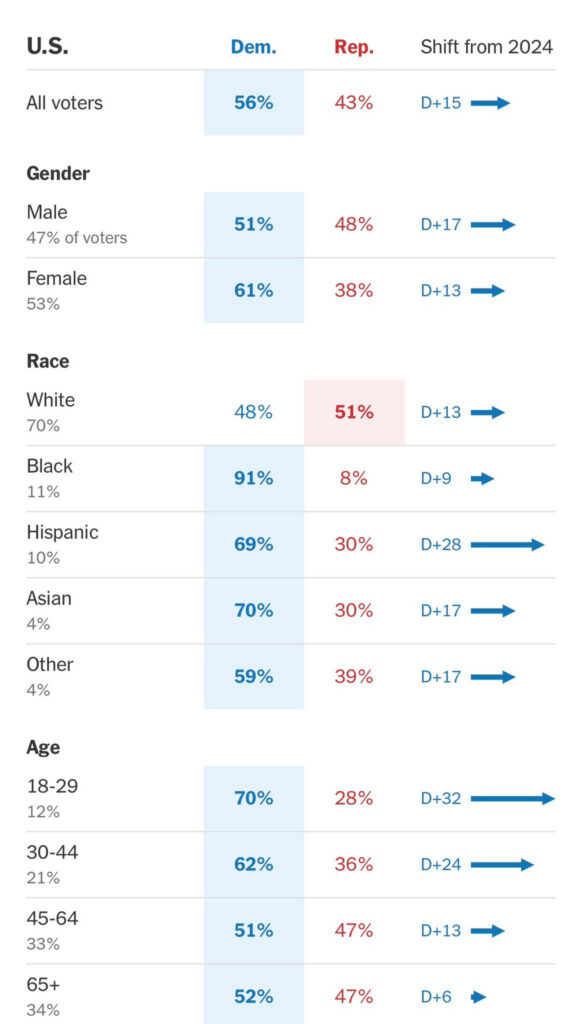
November 4 (Day after elections)
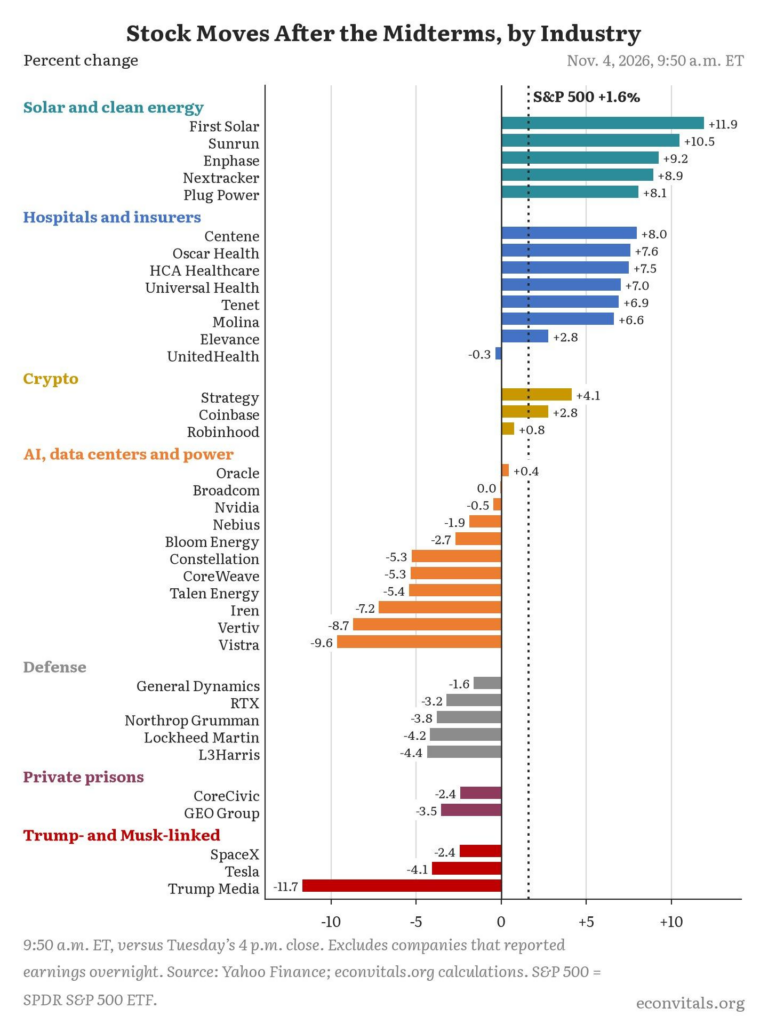
Nov 5: 36 hours after election results
“Investors’ postelection euphoria lasted just one day before fears about the AI trade came roaring into view.
Democrats’ sweeping victories on Tuesday sparked a monster postelection rally, but US stocks are now getting pummeled by worries that the blue wave will usher in a new era of tighter regulation for data centers and AI development, with cascading effects for the bull market and broader economic growth.”
“There’s blood on the streets today as AI-linked names tumble,” Nick Puckrin, a cross-asset analyst, wrote in a note. “The midterm election result didn’t really create a new fear, it was just the gust of wind that pushed over the house of cards that was already getting shaky.”
“Retail traders dump $358 million in stocks in biggest selling day since 2020 Retail investors are dumping US stocks at a pace not seen since the onset of the COVID-19 pandemic, breaking with their typical market-down-day habit of “buying the dip.” Everyday investors sold a net $358 million in individual US stocks on Thursday as of 2:58 p.m. ET, according to Vanda Research, putting them on track for their biggest single-day net selling spree since March 17, 2020, when retail investors pulled $502 million from individual stocks” https://finance.yahoo.com/markets/live/stock-market-today-thursday-november-5-dow-sp-500-nasdaq-plunge-chip-stocks-melt-down-193726491.html
🇨🇳 [Analysis: In China the AI bubble has already burst – Oct 27]
“The meltdown, tanking the mainland STAR50 index of AI and semiconductor leaders by 40% in less than four months and vaporising some $480 billion in market value, is an ill omen for wobbly world markets and a dampener on China’s efforts at encouraging its savers into stocks to fund the AI boom.
https://www.reuters.com/world/china/china-ai-bubble-has-already-burst-2026-10-26
🇺🇸 🏭🔻[NEWS: “Datacenters were on the ballot. US voters rejected them”]
“Datacenters, the facilities full of semiconductor chips that power artificial intelligence and a host of other online products, were on the ballot in elections in at least 40 jurisdictions across 10 states. Voters responded with a strong rebuke of the giant buildings, which have has become a symbol of the tech industry and AI.”
“Voters approved nearly every datacenter moratorium that was on the ballot, dozens in total, with one notable exception: Hardwood, North Dakota. The small city of a population of less than 1,000 people voted down a bill that would impose restrictions on datacenter development.”
https://www.theguardian.com/us-news/2026/nov/04/datacenters-midterm-elections
🏭 [Analysis: Chinese datacenters]
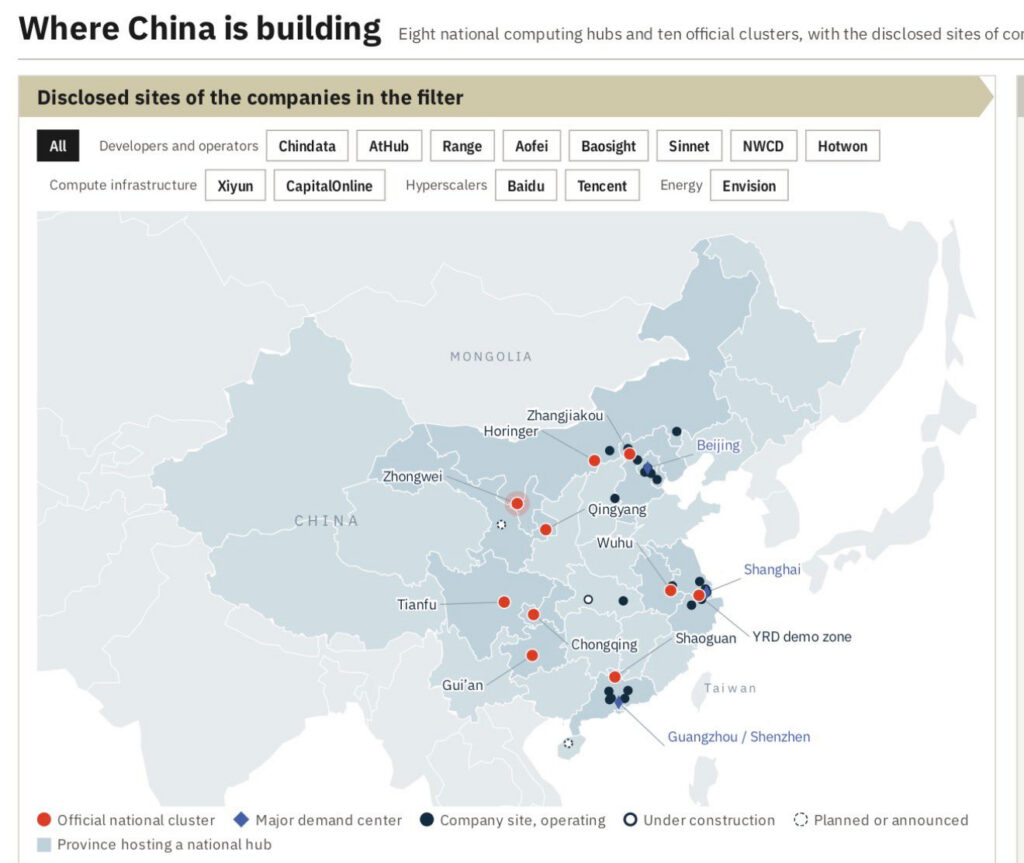
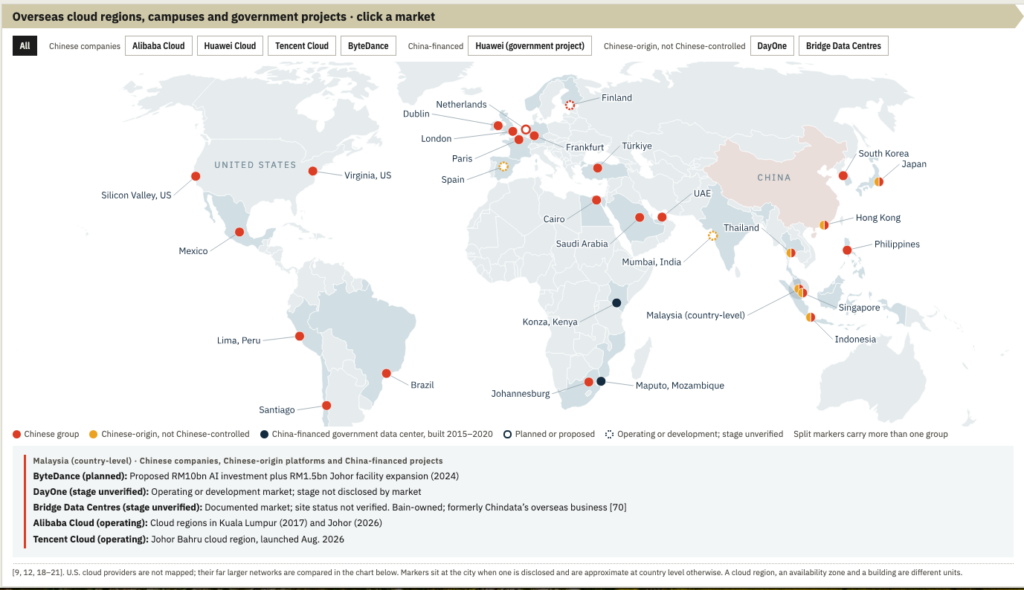
https://wirescreen.ai/briefings/china-data-center-buildout
See also: Kollar, J., & Stokols, A. (2026). Geopolitical ecologies of cloud capitalism: Territorial restructuring and the making of national computing power in the U.S. and China. Environment and Planning A: Economy and Space, 58(1), 38-58. https://doi.org/10.1177/0308518X251369704
“In the U.S., cloud firms operate as state-aligned actors, drawing on fragmented regulatory authority, public subsidies and national security discourse to expand into rural and peri-urban regions. China pursues a more centralized strategy through its East Data, West Computing initiative, redistributing infrastructure to inland provinces under state-led development goals. Through comparative regional analysis, we show how domestic infrastructural expansion underpins geopolitical rivalry, producing new forms of territorial governance and socio-environmental inequality. Far from immaterial, the cloud is grounded in enclosure, extraction and the spatial foundations of techno-industrial power.”
🏭 🔋 [Analysis:Global data center energy demand growth]
“Last year, data centers consumed more electricity than all but 10 countries.
While governments have courted data centers due to their potential economic benefits, many local communities have resisted their development over concerns about the impact on jobs, energy bills, water usage, and the environment. From Chile to Scotland to Australia, opposition to the massive facilities has erupted around the entire world.
“It’s a complicated moment,” said Boris Gamazaychikov, co-founder of the Sustainable AI Group, a research firm that focuses on AI’s environmental impacts. “The space is really polarized.”
As data centers proliferate, Foreign Policy looked at what their global footprint looks like right now and how it might evolve in the coming years.
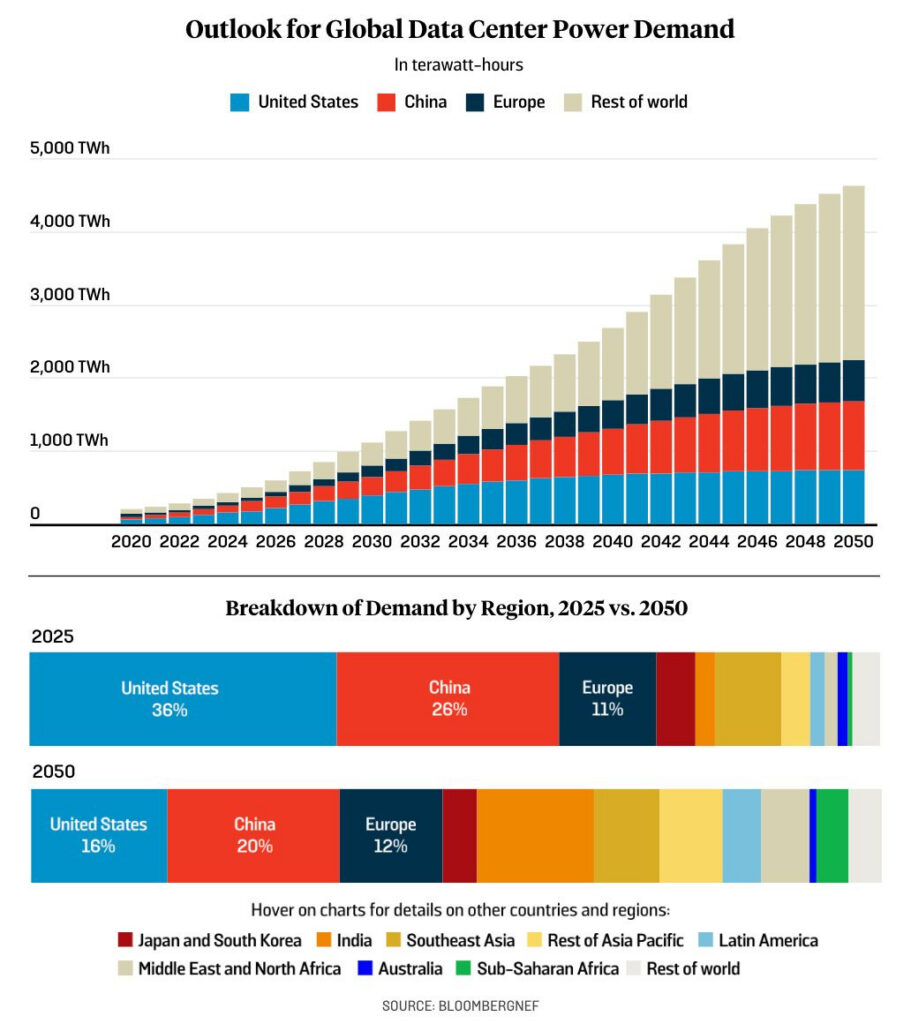
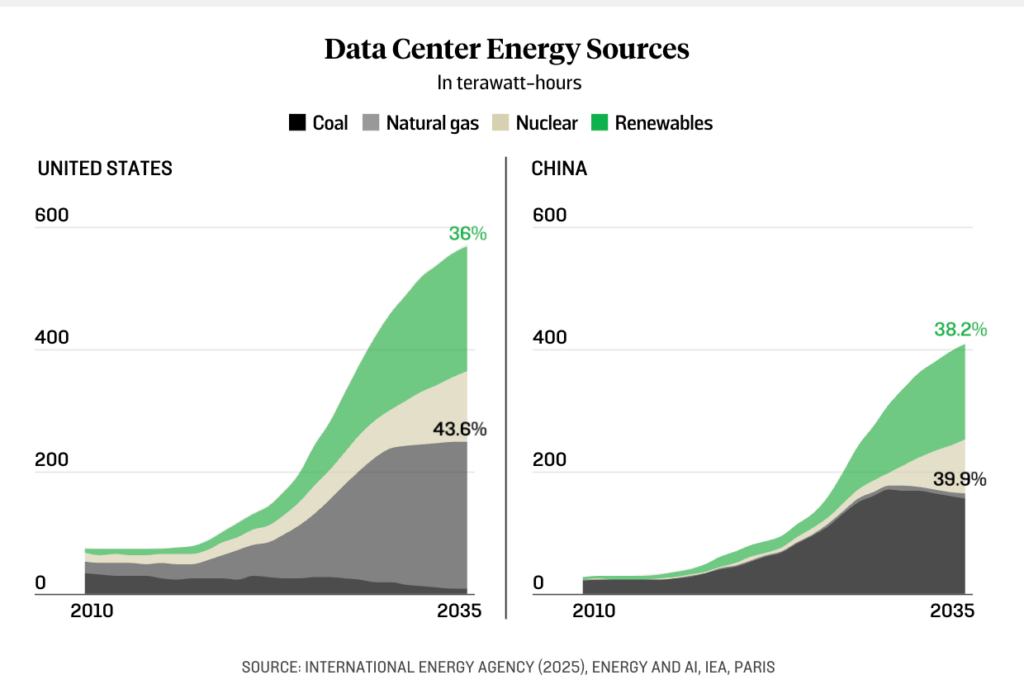
“But Beijing has some key advantages in ensuring a swift expansion. Unlike the United States, public pushback is rare, and Chinese companies can build quickly. The country also has cheap land and abundant energy, with coal currently fueling the bulk of the country’s data center electricity supply, according to the IEA.”
🇺🇸 🪫[Analysis: US energy gap]
“Contracted and operational electrical power from a selection of specialized AI cloud providers, in megawatts. Data dates differ; the absence of an operational power bar does not confirm that it is zero. Source: State of AI Report.”
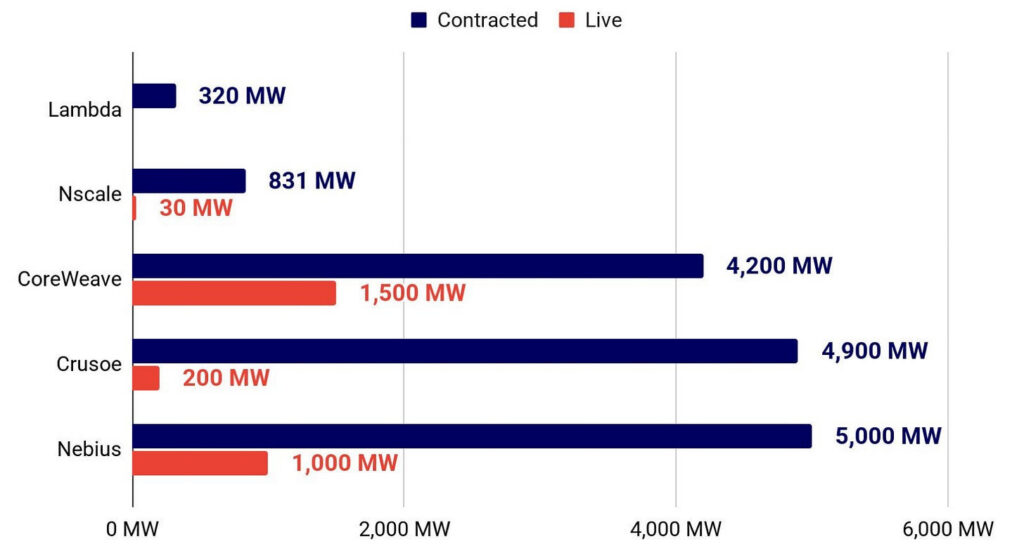
Via https://www.artificialaffairs.org/p/infraestructura-ia-centros-datos-cinco-graficos
🇨🇳 [Analysis: China’s energy buildout]
“The catch is that neither these households nor energy-starved industries are close enough to easily use all of that capacity. Much is sent to cities hundreds of kilometers away. Every year, more is produced and more is going to waste. China is now poised to spend trillions of dollars on a most ambitious power grid buildout. Spanning power lines, mega-batteries and other longer-term energy storage, the effort has the potential to harness the world’s biggest trove of renewable energy and tip the scales in Beijing’s competition with the US to develop artificial intelligence. It may also provide a template for other countries wrestling with squandered capacity and even blackouts, as parts of southern Europe…”
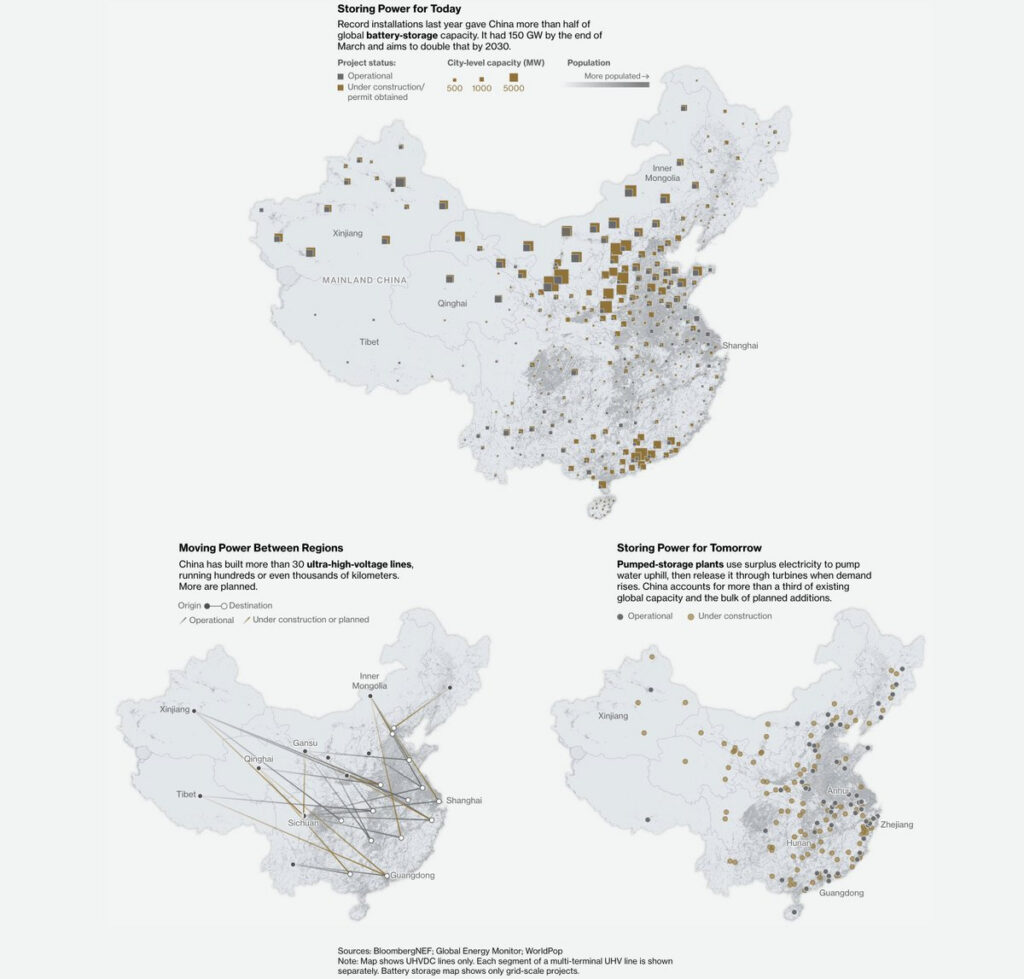
https://www.bloomberg.com/graphics/2026-china-ai-energy-future
🏭 [Analysis: Global distribution of compute capacity]
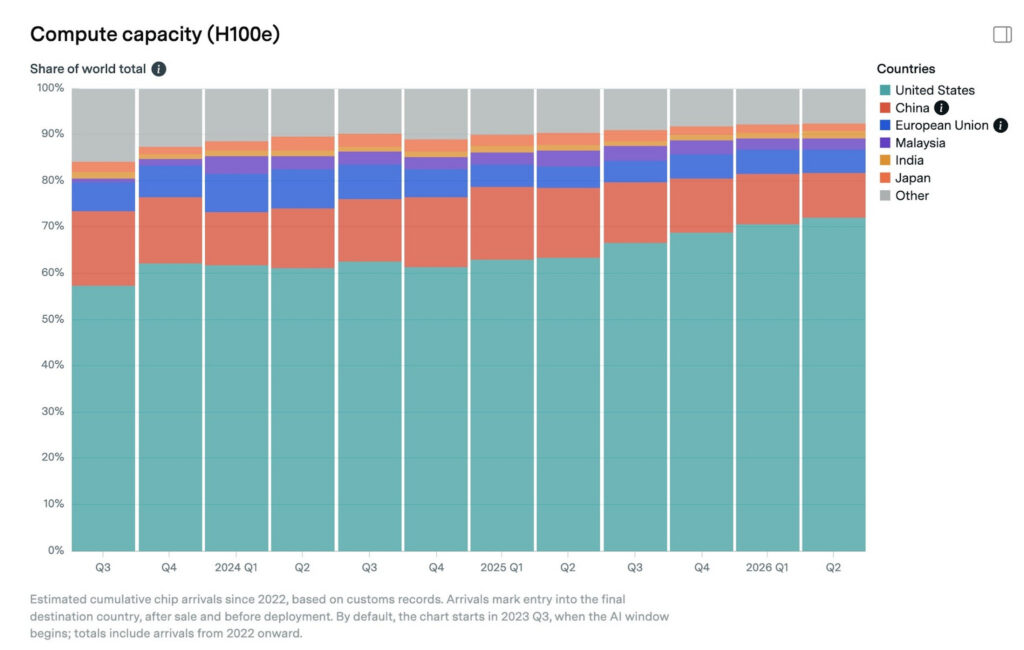
See also: “Digital Governance Stacks and the Infrastructure of Empires”
🪖 [Analysis: Datacenters as targets in war: 27 accounts in 2026]
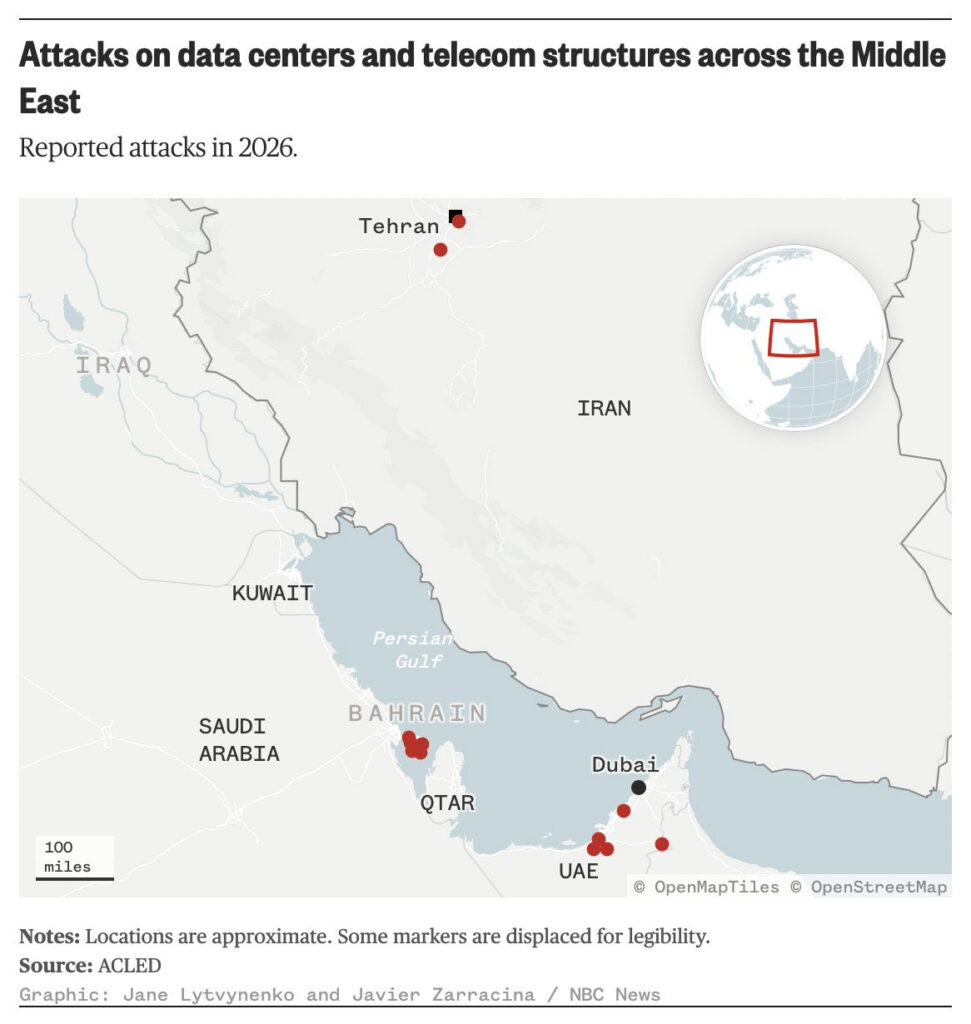
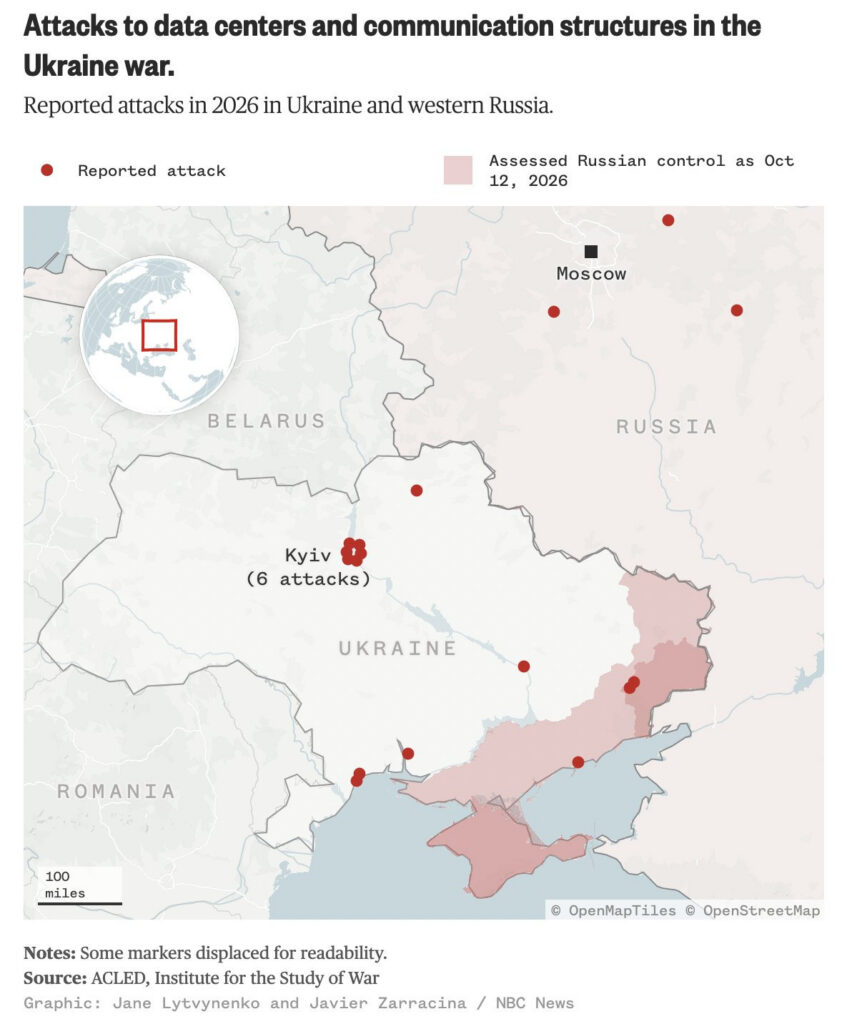
“An NBC News analysis shows at least 27 attacks affecting data centers across global conflicts. Experts say such bombardments are unlikely to cease.”
https://www.nbcnews.com/tech/security/data-center-attacks-reveal-new-front-modern-warfare-rcna603002
🇪🇺 [NEWS: Google Cloud outage causes major European banks and financial services to crash]
“A major Google Cloud outage has been linked to a disruption at Revolut. Customers of Lloyds, HSBC, and Bank of Scotland have also reported problems accessing banking services and making payments.
The disruption began shortly after 7 a.m. UK time, when Google Cloud reported technical failures affecting multiple services in its London-based europe-west2 region.
Problems have also been reported at vital services outside banking, the UK Court Service and the Criminal Bar Association as well as other businesses including Rightmove, DPD, and Screwfix, although it has not been confirmed whether all the incidents are connected”
https://cybernews.com/tech/google-cloud-outage-revolut-hsbc-lloyds
🇺🇸🇺🇦 [NEWS: Starlink slowdown for Ukraine sparks renewed concerns over US and Musk’s infrastructural power]
“The slowdown restricted Ukraine’s access to Starshield, the military version of Starlink, and targeted Starlink-supported Ukrainian military drones, airplanes and helicopters traveling faster than 100 mph.
Musk initially claimed that the choice to restrict the speed or usage of Starshield is made by the U.S. military and, ultimately, the president.
He later alluded to being involved in the decision in a post on social media, writing, “Ukraine military violated Starlink terms of service and used it for offensive drone strikes to kill people. That loophole was closed last week.”
Ukraine has used Starlink’s commercial services since the beginning of its war with Russia. It later added Starshield through SpaceX’s contract with the Pentagon. Musk in his post said Starlink is “critical to the defense of Ukraine.”
https://thehill.com/policy/international/6199329-zelensky-musk-starlink-slowdown
🇮🇱 📡 [NEWS: Alleged Israeli spy company heavily targeted Starlink users, sources say]
- “TrendAI telemetry shows Discover-Tech was No. 1 bidder on Starlink traffic in more than 100 countries, sources say
- Researchers believe ads likely aim to geolocate or surveil Starlink users, according to six people familiar with matter
- Israeli firm Discover-Tech already under scrutiny over allegations it spied on internet users”
“The same day that TrendAI published its report on Shadow-Earth-79, Canadian cyber watchdog Citizen Lab and New York advertising technology firm Confiant outed Discover-Tech by name.
Both groups said the Israeli company abused the ad bidding process, which can leak data about internet users back to the bidder.
Over time, bidders can collect that leaked data, collate it and merge it with other information to de-anonymize users, follow them around the web and, in some cases, set them up for targeting with surveillance software.
Citizen Lab and Confiant said the ads had been shown inside dozens of sensitive networks belonging to media organizations, governments and tech firms”
🇺🇸🇨🇦🇱🇹 [NEWS: EU, Canada and Lithuania pull out of disinformation conference after US pressure]
“The Trump administration was bothered by panels that referred to the U.S. as a disinformation threat.
The Trump administration pressured diplomatic officials from the EU, Canada and Lithuania to pull out of an international conference on disinformation after organizers announced panels warning of the threat posed by American government officials and the country’s influence broadly, according to excerpts of a State Department cable seen by POLITICO.
The conference, titled #Disinfo2026, included sessions that described the U.S. as a “foreign information manipulation and interference” actor, or “FIMI,” which bothered the Trump administration, according to the cable. The conference is being held Wednesday and Thursday in Vilnius, the Lithuanian capital.
The State Department asked American embassies in several European countries and the EU to express Washington’s concerns and “assess” whether the governments involved in the conference agree with the U.S. being characterized as a FIMI actor, according to the cable.”
https://www.politico.com/news/2026/10/07/disinformation-conference-europe-us-pressure-01111134
See also:
- The Guardian article
- Journal article: Disarming the Propaganda Machine [🔓Open access]
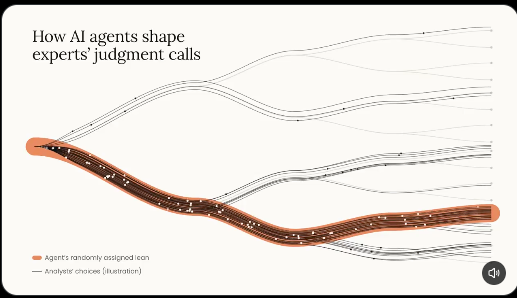
🦾 [Analysis: How AI agenda shape experts’ judgement calls]
“Across the four analytical choices, analysts went with their agent’s lean 86% of the time. If the agent’s input made no difference, we’d expect about 50%. When analysts had already expressed their own preference before the agent weighed in, they switched away from it 60% of the time if the agent disagreed, compared to 6% if it agreed.
Afterward, when asked to explain their choices, 77% of analysts used the agents’ own arguments—sometimes word for word—but only 15% credited the agent as the source of those arguments. Analysts who followed the agents’ recommendations closely were about as confident in their final recommendation as the rest, and roughly as likely to call it the product of their own judgment.”
https://www.anthropic.com/research/agents-judgment-calls
📏 [NEWS: Startups recalibrate Chinese AI for the West]
“A growing number of startups are editing powerful Chinese open-weight models for Western businesses that are concerned about censorship and security.
- Highly capable, low-cost Chinese open-weight models see widespread adoption, yet Western enterprises fear censorship, cybersecurity risks, and geopolitical bias.
- Startups see business opportunities in editing the models to strip state propaganda and security flaws for Western markets.
- Many commercial users deploy unmodified models, seeing little need for changes
https://restofworld.org/2026/western-startups-realigning-chinese-ai-models
🌳 [Analysis: Sovereignty as a service?]
“Number of sovereign AI infrastructure projects that mention each provider in the CNAS data compiled for the report. A single project may mention multiple providers with different roles; these figures do not represent market share. Source: CNAS, via the State of AI Report.”
Via https://www.artificialaffairs.org/p/infraestructura-ia-centros-datos-cinco-graficos
See also: Sovereignty as a service: How big tech companies co-opt and redefine digital sovereignt [academic article]
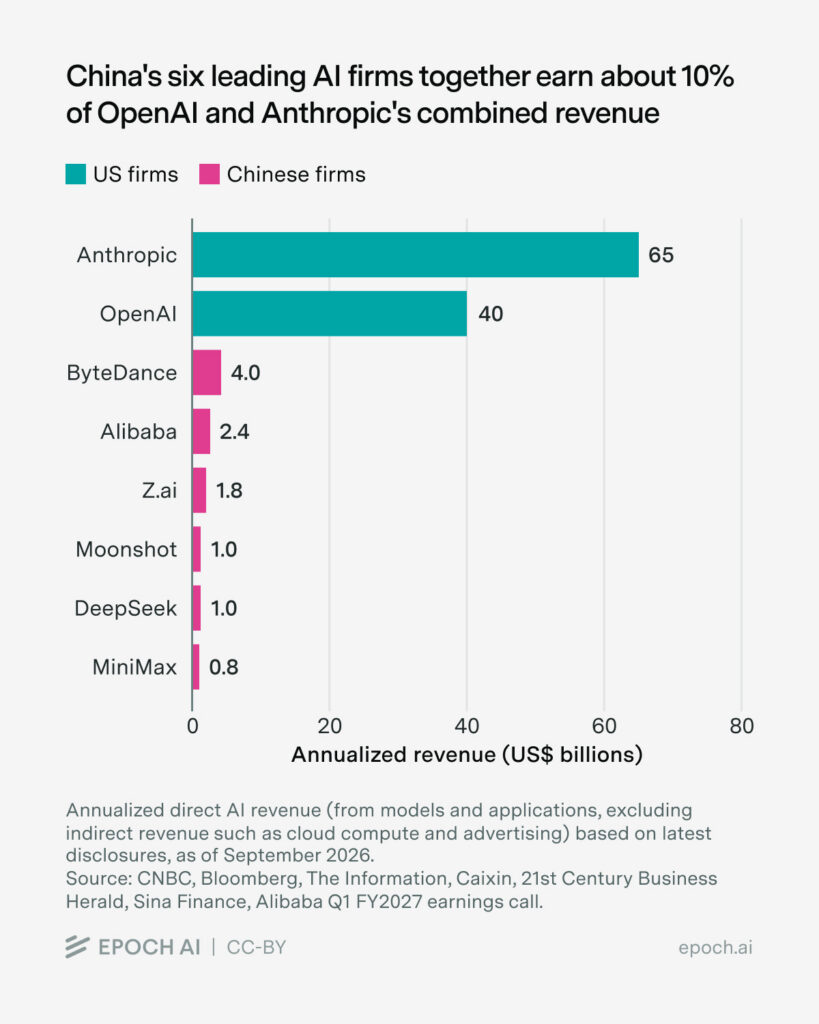
🇨🇳 💸 [Analysis: China’s AI..is openness unprofitable?]
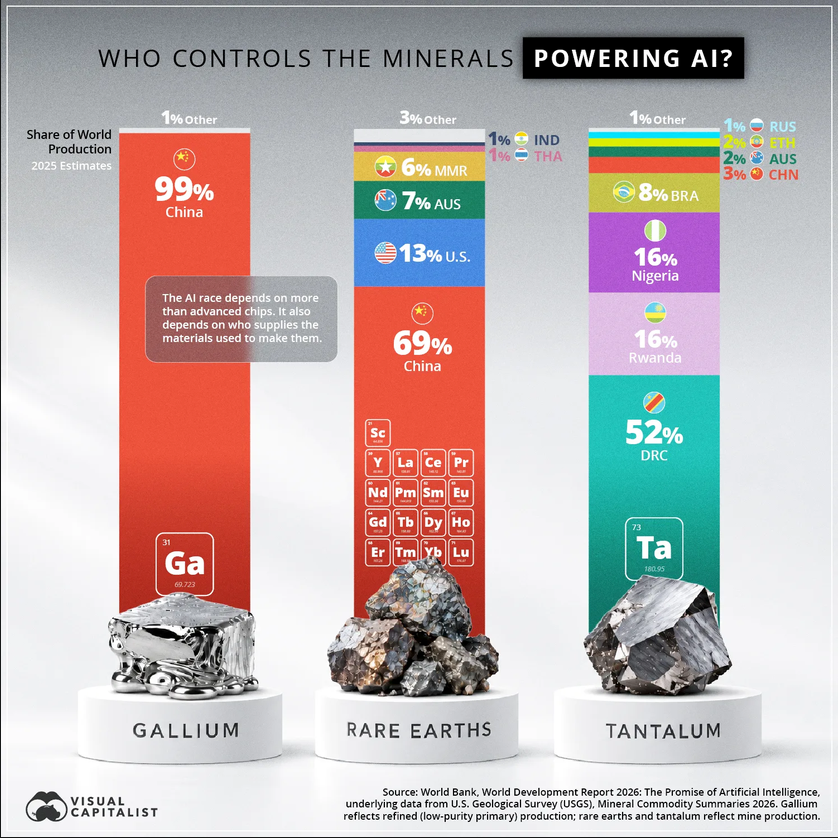
[Analysis: Who controls the minerals powering AI?]
- “China accounts for 99% of estimated global processed gallium production and 69.2% of rare earth mine production.
- “The Democratic Republic of the Congo produces 52% of the world’s tantalum, followed by Rwanda and Nigeria.
- These lesser-known materials are used in high-performance semiconductors, magnets, and power-management components found across AI hardware.”
🌍 🇬🇭 [NEWS: Ghanaian Minister for Communication calls for African digital autonomy]
“Speaking at the 15th Africa Internet Governance Forum on Tuesday, November 3, 2026, Mr George said Africa has to stop relying on digital systems built elsewhere and develop the ability to design, build and regulate technologies that fit its own needs and realities. […]
“He recalled Nkrumah’s declaration that “we face neither east nor west. We face forward,” and said it still applies as African countries look to control their own digital systems.
“The same is true of digital sovereignty. We learn to build by building. We learn to govern by governing,” he said.
https://www.adomonline.com/sam-george-urges-africa-to-take-control-of-its-digital-future
🌍 🇪🇹 [NEWS: Ethiopia charting a path for African Union AI – close to Google?]
“African countries’ data sovereignty is vulnerable because most AI companies are controlled by major powers outside the continent. Thus, African data could fall into the wrong hands. At its 1 339th meeting, the PSC called for stronger African AI governance and coordination through effective continental and national regulatory frameworks, accelerated development of a common African position on AI and policies to safeguard digital sovereignty.”
“The AU Commission signed a memorandum of understanding with Google in February 2026 on cooperation in AI development and governance, research and innovation. It includes a commitment to train three million students and teachers across Africa by 2030, providing free access to tools such as Gemini Pro and additional support for local languages, including Amharic. The AU Development Agency-New Partnership for Africa’s Development has launched a complementary continental AI roadmap, while regional economic communities such as the Intergovernmental Authority on Development are developing a common regional artificial intelligence framework and strategy.”
🌍 [NEWS: Former African Development Bank President calls for $10 bn fund for African Tech Sovereignty]
“Former African Development Bank President Dr Akinwumi Adesina has urged Africa to seize control of its digital future by actively leading the artificial intelligence (AI) revolution rather than remaining a consumer of foreign technologies.
The fund is designed to anchor a broader $50 billion investment mobilisation programme over the next ten years. Warning that the global AI race will dictate future economic power, Adesina stressed that a continent projected to reach 2.5 billion people by 2050 cannot afford to depend on external innovations.
“Africa must approach the AI revolution as a continent determined not to follow, but to lead,” he stated, framing technological ownership as a matter of core economic sovereignty.” https://dailytrust.com/adesina-proposes-10b-ai-fund-to-secure-africas-technological-sovereignty/
🇺🇸 🇨🇳 [Analysis: The U.S. Wants Global South Countries to Reject Chinese AI. Will They?]
“China’s AI competition with the United States is increasingly about more than building the most powerful models. For countries across the Global South, affordability, practical performance, customization, and control over data are often more important than achieving artificial general intelligence. Chinese open-weight models offer flexibility, while US companies are competing more aggressively on cost. The battle also extends beyond AI models to servers, cloud infrastructure, technical support, and the ability to build domestic AI capabilities. As Washington and Beijing develop competing technology coalitions, countries face growing pressure to choose sides while seeking to protect their digital sovereignty. Yet neither complete technological independence nor an enforceable divide between US and Chinese AI ecosystems appears straightforward”.
🇨🇳 [Analysis: “Chinese tech helps repressive African governments crush dissent”]
“When China paid $200m to build a new headquarters for the African Union (AU) in Addis Ababa (pictured), it was perceived as an act of great generosity. But five years later technicians noticed something odd. Late every night the servers, which had been provided by China, whirred furiously. Data was being exported to servers in Shanghai, including confidential emails, diplomats’ memos, security-camera footage and more. Algerian and Ethiopian specialists who later swept the building reportedly found microphones hidden under desks and inside walls.
The Chinese government and the companies involved, Huawei and ZTE, all denied any wrongdoing. No surprise there. More dismaying was the public reaction of African leaders, who voiced fury not over the surveillance but towards the reporters who helped expose it. In a gripping new book, Paul Kenyon, a British journalist, argues that China is the latest external power out to gouge the continent while empowering corrupt, local power-brokers.
His broader warning is that much of Africa is being taken over by Chinese tech. Many autocratic governments are using Chinese systems to monitor their people, especially dissidents. That means snooping via mobile-phone networks installed by Chinese firms, for example. Think of the methods of information control in Xinjiang being applied in Zimbabwe, Kenya and beyond. Mr Kenyon, who has a good eye for detail but a tendency to overstate his case, alleges that Chinese engineers in Africa are the “foot soldiers of China’s digital colonialism, enabling totalitarian regimes to prosper in Africa because China wants them to”. https://www.economist.com/culture/2026/11/05/chinese-tech-helps-repressive-african-governments-crush-dissent
🇺🇸🇨🇳 [Analysis: Trump’s ‘Agreements on Reciprocal Trade’ (ARTs) threaten equitable access to the internet in Global South]
“To date, the U.S. has signed ARTs with 10 countries — Malaysia, Cambodia, El Salvador, Argentina, Ecuador, Guatemala, Bangladesh, Taiwan, Jordan, and Indonesia — with framework deals in place with several others. Hidden in most of these deals is a provision that requires these countries to refrain from using information and communication technology (ICT) suppliers that may “compromise the security, safeguards, and intellectual property of ICT infrastructure, including 5G, 6G, communication satellites, and undersea cables.”
The ARTs with El Salvador, Guatemala, Indonesia, and Malaysia further require them to consult with the U.S. on which suppliers meet these standards. The purpose of this provision is, simply put, to give the U.S. the ability to exclude Chinese ICT suppliers such as Huawei and ZTE from these countries, should it so choose. This could also benefit U.S. suppliers such as CISCO and Hewlett Packard, amongst other”
🇨🇳[Book Chapter: “The Digital Silk Road Comes to LAC”]
“China’s Digital Silk Road has expanded into the Americas, reshaping the region’s technological landscape while intensifying strategic competition with the United States. It traces the evolution of China’s concept of “digital sovereignty,” from early internet controls and post-Snowden anxieties to the formalization of cyber, data, and security laws that underpin Beijing’s global tech outreach. The chapter then maps the Digital Silk Road’s concrete footprint in LAC: Huawei and ZTE dominance in telecommunications networks, Chinese-built data centers and undersea cables, smart city surveillance systems, cloud computing platforms, fintech expansion, and emerging AI partnerships.
Through the lenses of complex interdependence, realism, and dependency theory, the chapter evaluates competing narratives. Many Latin American governments and writers view Chinese technology as affordable, fast, and development-oriented, prioritizing economic gains over US security warnings. Meanwhile, US/Western writers frame Chinese digital infrastructure as a dual-use strategic risk, citing espionage laws and cyber intrusions. Ultimately, the chapter argues that LAC’s challenge is not choosing between Washington and Beijing, but crafting digital sovereignty – leveraging competition to build resilience, diversify partners, and avoid a new era of technological dependency”
🇺🇸 [Analysis: “Resist, give in, or fly under the radar:Three Latin American digital strategies”]
“How have Latin American countries responded to U.S. trade pressure on their digital policies? Roberto Bissio compares the reactions of Brazil and Mexico, contrasts the capitulation of Argentina and others, and shows how Uruguay managed to “fly under the radar”. He concludes that regional coordination is essential if medium and small countries want to have some digital sovereignty”
Essay on pg 26: https://storage.ghost.io/c/79/87/7987cab7-5645-4866-b316-bf0a94bd837f/content/files/2026/11/TTG-Scan-Latin-America-EN.pdf#page=26 )
🇧🇷📘 [NEWS: Meta employees said Lula’s accounts were hindered during Brazil election, Folha reports]
“Meta employees acknowledged in internal communications that the Instagram accounts of Brazilian President Luiz Inacio Lula da Silva were hindered by restrictions during the country’s election, newspaper Folha de S.Paulo reported on Friday, citing messages it reviewed. The messages also acknowledged the platform recommended the profile of challenger Senator Flavio Bolsonaro, as well as his WhatsApp channel, according to the report”
- According to Lula’s party, some of his posts appeared without a share button, suffered reduced reach, and had stories that prevented reactions and sharing, in addition to appearing without audio or playing at accelerated speed
- A justice at Brazil’s top electoral court ordered the company on Thursday not to unjustifiably limit the reach of political content related to both candidates through the end of the runoff campaign
- The ruling also stipulated that Meta AI, the company’s artificial intelligence chatbot, must not favor either candidate when generating election-related content”
🇧🇷 [Analysis: Lula victory means Brazil will continue to play leading role in efforts to tame tech behemoths]
“The Brazilian competition authority CADE has also been a leading jurisdiction in imposing interim measures to stop abusive conduct while awaiting legal judgment. This year it forced Meta to stop tying its AI agents to its social media services, a decision that was followed by Italy and the EU. In 2020, it forced Meta — then called Facebook — to suspend its acquisition of Brazilian credit card company Cielo over competition concerns.
Many of Brazil’s recent actions were taken in response to problems with the 2022 elections […]
“Given this recent set of experiences, it might seem reasonable to expect the new Lula administration to double down on efforts to protect the country’s sovereignty and make sure powerful digital platforms do not override rules in place.
But his government will likely find it difficult to pass new legislation. For instance, the government has already teed up a new Digital Markets Bill, similar to the European Commission’s Digital Markets Act, and the UK’s Digital Markets, Competition and Consumers Act. But Bolsonaro supporters hold two thirds of the Senate and Chamber of Deputies and are widely considered unlikely to approve the bill in its current form.
The Lula government will remain free to use existing rules more aggressively. For example, Brazil’s antitrust regulator CADE can force tech platforms to change their behavior when there is clear evidence that they have violated the law.”
📘 [NEWS: Meta’s global affairs officer Joel Kaplan to leave company after 15 years]
“Meta Platforms’ chief global affairs officer Joel Kaplan will leave the company next year after 15 years there, a spokesperson told Reuters on Tuesday.
President and Vice Chairman Dina Powell McCormick will add external affairs to her portfolio, the spokesperson said.
• The move comes ahead of the November 3 midterm elections
• McCormick was part of the Donald Trump administration during his first stint as US president
• Kaplan was elevated to Meta’s top policy role in January last year, as the social media giant rolled back US fact-checking, ended diversity initiatives and sought closer ties with Trump”
https://finance.yahoo.com/technology/articles/metas-global-affairs-officer-joel-173141836.html
🌲 [ANALYSIS: Sovereign Compute and Local Rules Replace Western Governance Frameworks]
“A decisive shift is occurring as developing nations explicitly turn away from Western regulatory models. In South Africa, a joint policy paper revealed that Vodacom warns African governments against copying EU AI Act rules, while South Africa Policy Paper Warns European AI Rules Threaten Local Ecosystems details how transplanting heavy European risk obligations penalizes informal workers and domestic startups. Instead of copying foreign legislation, states are enacting targeted national rules. Moscow has established an explicit statutory frame for foundation models exceeding one billion parameters: Russia Legalizes Scraping for National AI Models Under New Law institutes Federal Law No. 243-FZ to authorize web scraping for national training pipelines while deferring commercial copyright determinations to 2027. Judicial authorities are taking similar enforcement stances. Russian Supreme Court Chairman Igor Krasnov noted during talks in Beijing that Judicial Guidance Ends Unmonitored Generative AI Development, citing Chinese rules requiring direct human control and clear liability.
Elsewhere, local experimentation is driving broader legal frameworks: – In China, China’s Local AI Laws Build Governance Rules as National Standards Lag shows provincial statutes enacting labor protections and algorithmic transparency requirements ahead of federal law. – India Prepares Consultation Paper on AI Regulation as New Delhi moves toward explicit statutory oversight after years of policy shifts. – Egypt’s AI Rules Must Resolve Agency Overlap to Protect Domestic Startups warns that Cairo’s draft four-tiered risk structure must align with existing statutes to avoid administrative bottlenecks. – In South America, Brazil Law 15.211/2025 Forces Digital Platforms into Age Assurance Duties establishes mandatory age verification and advertising limits for minors, supported by Brazil Issues Guidance on Youth AI Use Under ECA Digital Law”
🇮🇩 🇨🇭 [NEWS: Indonesia’s Nongsa Digital Park, Swiss firm sign sovereign AI deal]
“Indonesia’s Nongsa Digital Park in Batam signed a cooperation agreement with Swiss sovereign cloud and artificial intelligence (AI) service provider PHOENIQS AG to develop sovereign AI capabilities in Indonesia, targeting the Southeast Asian market.
The MoU was signed on October 29 in Basel-Landschaft, where PHOENIQS AG’s AI supercomputer is located, according to a written statement from the Indonesian Embassy in Bern on Tuesday.
The cooperation enables Indonesia to build capacity in developing sovereign AI-based data centers to serve rising needs of businesses and industry, especially banking, telecommunications, and smart manufacturing.
The technology will give Indonesia or data owners full control (sovereignty), which differs from data residency, and is based on supercomputers and quantum technology. This independence is crucial in an era of technology competition amid global geopolitical rivalry.”
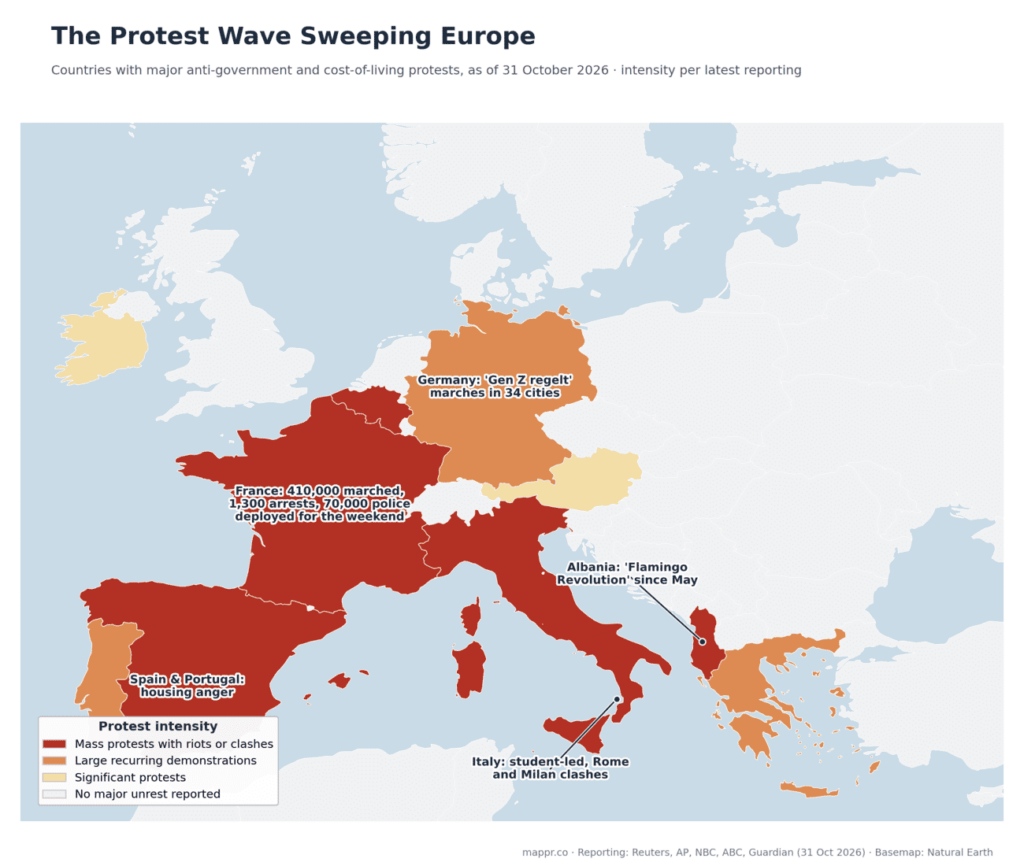
🇪🇺 [Analysis: Europeans protest affordability gap]
“Ten countries are in the protest wave. France, Italy, Spain, Portugal, Greece, Albania, Belgium, Germany, Austria and Ireland have all seen major demonstrations since September, the broadest European unrest in years
France is the epicentre. An estimated 410,000 people marched last week”
🏰 [Opinion: When Geopolitics disappears]
“The narratives that sustained the West’s confidence in its moral, industrial, and technological superiority lie shattered. Western democracies are going through economic and social disorientation in a new geopolitical era defined by digital empires, national interests, and variable-geometry alliances. As the universalization of liberal democracy fades, China has patience and flexibility built into a new narrative of Confucian-inspired techno-socialism, state capitalism, and doctrinaire Leninism that proves attractive to the Global South. Traditional geopolitics aimed to grasp power through geography, strategic interests, and a balance of forces, while the post-Cold War liberal order aspired to moderate that brutal logic through international law and the UN Charter.
However, that technocratic optimism fractured with the 2008 financial crisis, was destroyed by the 2020 pandemic, and is now buried by the invasions of Ukraine and Iran, leaving us prisoners of geography in its most simplistic form. Donald Trump’s second term did not invent this crisis, but it removed the reassuring rhetoric and called into question the alliances and institutions that sustained the international order.
This alternative vision is illustrated by the anti-democratic thinking of the Dark Enlightenment, which replaces the divide between democracy and dictatorship with practical, rival models of highly concentrated power resulting in digital authoritarianism. What is emerging is a clash between different civilizational models: Chinese techno-socialism versus a libertarian-oriented digital capitalism driven by Silicon Valley, where democracy becomes subordinate to technological power.”
https://magazine.zenith.me/en/politics/myths-technology-and-pursuit-global-power
See also: Legal infrastructure for transformative AI governance [Scholarly article]
🤝 [Scholarly discussion: Cooperation Against All Odds: Transnational Networks and the Future of Global Order]
🇺🇸 💥 [Deep Dive: The US AI Bubble (cont)]
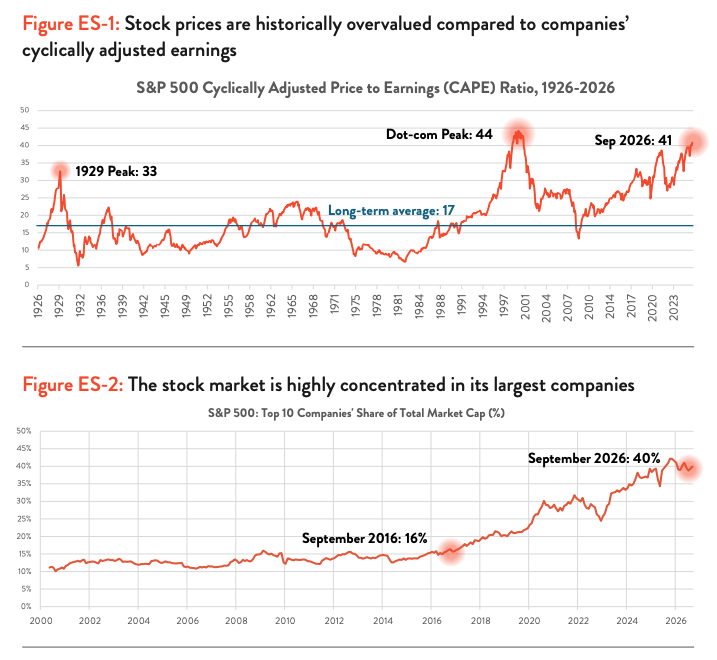
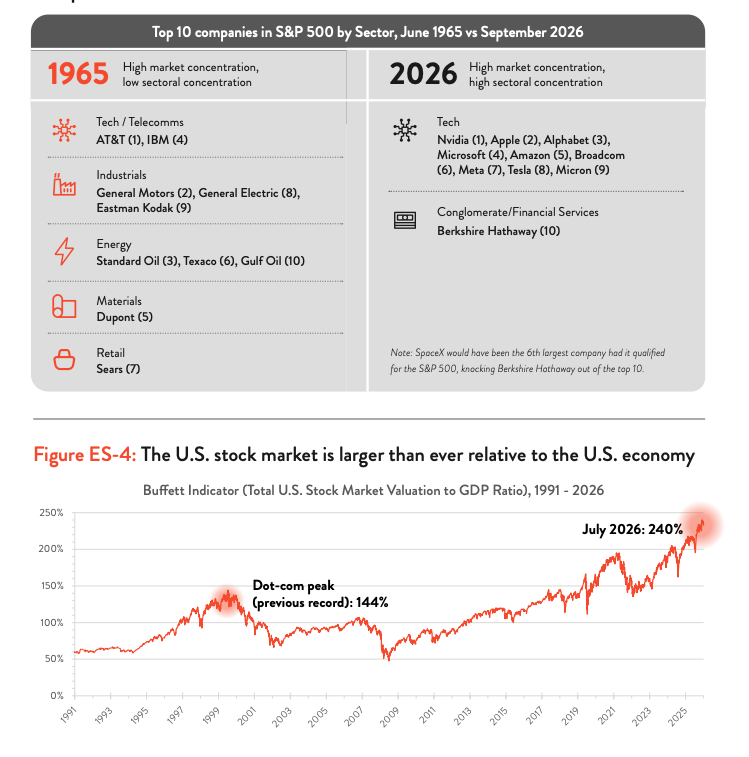
Key figures showing the depth of the problem. Via report by Open Markets Institute entitled “Protecting People and the economy when the AI bubble bursts”
[See also-> Pulse #33 Deep Dive into the US AI infrastructure buildout]